Table of Contents
The Night My Furnace Died at 4,000 Feet
It was late October, somewhere in the foothills outside Flagstaff, and the temperature had dropped into the low 30s. I remember climbing into bed feeling pretty smug about my setup — full tank of propane, thick sleeping bag, and a furnace I’d never even had to think about. Then, around 2 a.m., I woke up shivering.
The thermostat was set to 68. The furnace fan was running. But no heat was coming out of the vents. Just cold air being pushed around a cold trailer.
If you’ve ever dealt with travel trailer furnace repair in the middle of a trip, you know exactly the feeling I’m describing — that mix of confusion, mild panic, and “please don’t let this be expensive.” I spent the next twenty minutes with a headlamp clipped to my beanie, crouched by the furnace access panel outside, trying to remember everything I’d half-read online months earlier. Turns out, most furnace problems are shockingly simple to fix once you know where to look. That night taught me more about RV furnaces than any manual ever did, and I’ve been fixing my own (and my neighbors’) ever since.
This guide is everything I wish I’d known before that cold night — written the way I’d explain it to a friend, not a technician’s manual full of jargon.
Why Travel Trailer Furnaces Fail (More Often Than You’d Think)
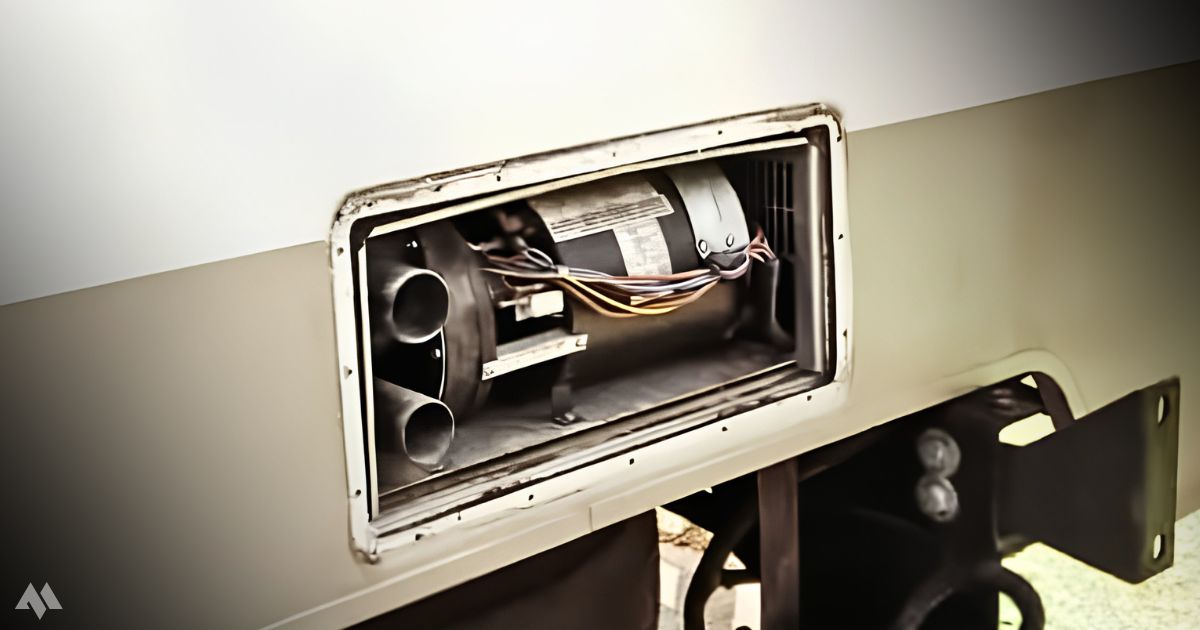
RV furnaces are simpler than home furnaces, but they’re also more exposed. They live low to the ground, near road grime, moisture, mice, and vibration from thousands of miles of highway. Over a season or two, small issues build up.
Here are the usual suspects behind most RV furnace troubleshooting calls:
- Weak or dead battery – RV furnaces run on 12V DC power to operate the fan, ignition board, and gas valve. No propane is involved in starting it — it’s all electric until ignition. A tired battery is the single most common cause of “furnace won’t turn on at all.”
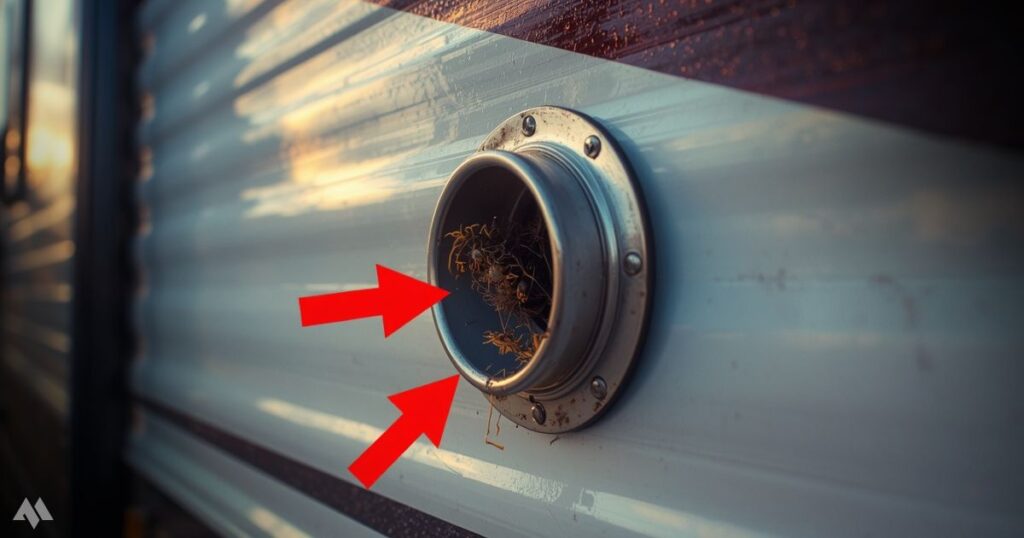
- Dirty or blocked exhaust/intake vents – Wasp nests, road debris, and even leaves can block the exterior vent, and the furnace’s safety system will refuse to run rather than risk carbon monoxide buildup.
- Low propane or a closed valve – Sounds obvious, but it happens constantly, especially after storage.
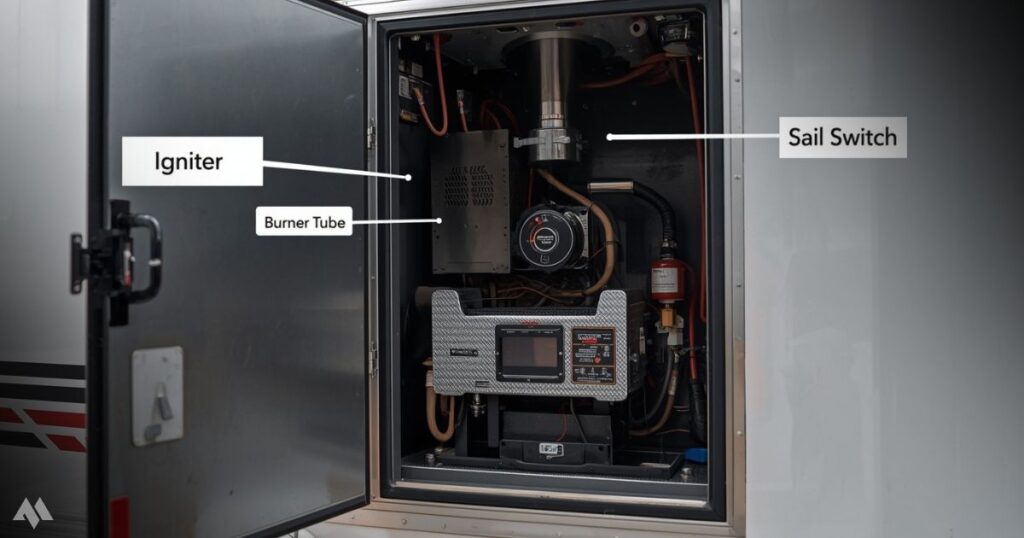
- Faulty sail switch or limit switch – These are the safety switches that confirm air is actually flowing and the unit isn’t overheating.
- Dirty igniter or ignition board issue – Corrosion and dust interfere with the spark.
- Thermostat problems – Sometimes the furnace is fine, and it’s the wall thermostat lying to it.
Notice something? Almost none of these require replacing the whole furnace. That’s good news for your wallet.
Step-by-Step: How to Diagnose Your RV Furnace Problem
Let’s walk through this the same way I do it now, in order, because doing it out of order just wastes time.
Step 1: Check the Power
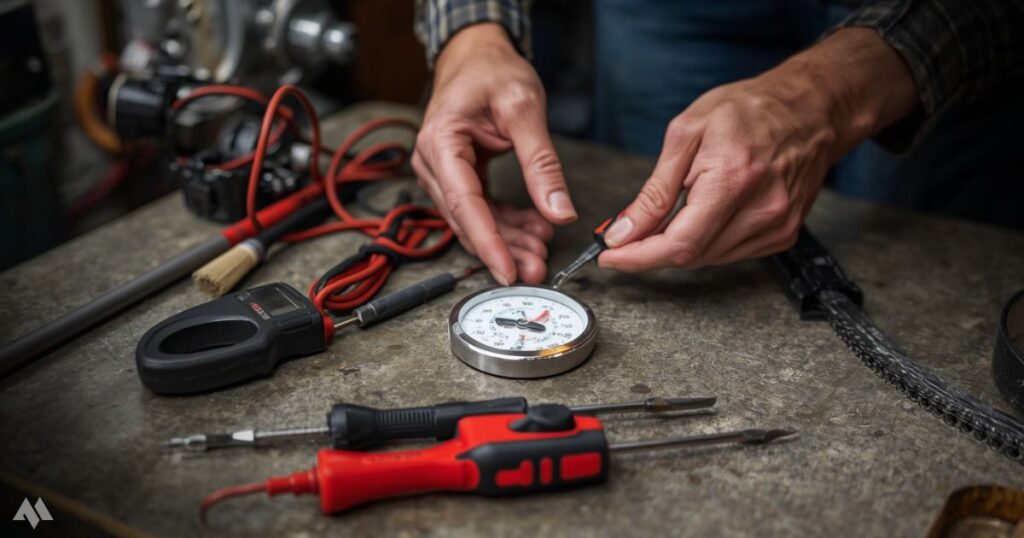
Grab a multimeter or even just your interior lights. If your lights are dim or your battery monitor shows under 11.5 volts, that’s likely your issue. Furnaces are power-hungry, especially the fan motor, and a marginal battery that runs everything else fine often can’t push enough current to fire up the furnace’s ignition sequence.
Fix: Charge the battery fully (shore power or generator), or check your battery connections for corrosion. I’ve fixed more “dead furnaces” this way than any other method — including my own that night in Flagstaff. My battery had dipped overnight from dry camping two days straight, and everything else in the trailer seemed fine because LED lights sip power. The furnace, though, needs a real jolt to run its board and blower motor.
Step 2: Confirm Propane Supply
Check both propane tanks (not just one — I’ve seen people run one dry and assume the whole system is empty). Make sure the valve at the tank is fully open, and check that your regulator hasn’t frozen or failed, which can happen in very cold, damp conditions.
Step 3: Inspect the Exterior Vent
This is the one people skip, and it’s often the culprit. Go outside, find the small rectangular vent (usually low on the trailer’s exterior, near where the furnace sits inside), and look for:
- Spider webs or wasp nests (extremely common — wasps love the residual warmth and enclosed space)
- Leaves, dirt, or road debris packed into the screen
- A bent or dented vent cover blocking airflow
A blocked vent trips the furnace’s safety sensors, and it simply won’t ignite — this is a built-in safety feature, not a malfunction, so don’t panic if this is the fix. A can of compressed air and a flashlight usually solves it in five minutes.
Step 4: Listen to the Sequence
Turn the thermostat up and listen carefully. A healthy furnace startup sounds like this: fan motor spins up (whoosh), a pause of a few seconds, a clicking sound (the igniter sparking), then a soft “whump” as the burner lights.
- Fan runs, but no click/spark → Likely an ignition board or igniter issue.
- No fan at all → Power problem (back to Step 1) or a blown fuse.
- Click/spark happens, but no ignition → Propane supply issue, or a dirty burner orifice.
- Furnace lights, then shuts off after a few seconds → Often the sail switch or a limit switch is misreading airflow, sometimes due to a dirty blower wheel.
Common Camper Furnace Maintenance Habits That Prevent Repairs
Honestly, most of the furnace headaches I hear about could’ve been avoided with a bit of camper furnace maintenance before the season started. Think of it like changing your car’s oil — cheap and boring until you skip it.
Here’s my pre-season checklist, and it takes about 20 minutes:
- Vacuum the return air vent inside the trailer. Dust and pet hair build up here and restrict airflow, which stresses the blower motor.
- Check the exterior vent for nests, every single time — even mid-season, especially if you’ve been parked somewhere for more than a few days.
- Run the furnace for 10 minutes before a cold-weather trip, even in warm weather at home. This lets you catch a problem in your driveway instead of on the road.
- Inspect propane lines and connections for cracks, especially rubber hoses that get brittle with UV exposure over time.
- Test your carbon monoxide and propane detectors. Not furnace parts exactly, but absolutely essential — never ignore a CO alarm, ever, even if you’re sure the furnace is fine.
- Clean or replace the battery terminals and check water levels if you have a flooded lead-acid battery.
I now do this every March before my first spring trip, sitting in my driveway with a coffee, and it’s saved me from at least three cold nights since that Flagstaff trip.
When You Can Fix It Yourself vs. When to Call a Pro
I’m a big believer in DIY, but I’ll be straight with you: some travel trailer furnace repair jobs are simple weekend fixes, and others are genuinely dangerous if done wrong.
Safe to DIY:
- Cleaning the exterior vent
- Charging or replacing the battery
- Cleaning the return air filter/vent
- Checking and opening propane valves
- Vacuuming dust from the blower compartment (with furnace off and unplugged)
- Replacing a blown 12V fuse
Call a certified RV technician or propane specialist for:
- Any repair involving the gas valve, burner assembly, or ignition board wiring
- Suspected propane leaks (you’ll often smell it — that rotten egg smell — or hear hissing)
- Persistent CO detector alarms
- Cracked heat exchangers (a serious safety issue — this is what actually separates furnace heat from your living space, and a crack can let combustion gases into the trailer)
This isn’t about scaring you away from working on your own rig — it’s about respecting that propane and carbon monoxide are unforgiving if something goes wrong. The vent cleaning and battery checks I mentioned solve probably 70% of the “furnace won’t work” complaints I hear from fellow RVers at campgrounds. The remaining 30% genuinely need a professional, and that’s fine too.
A Quick Story: The $4 Fix That Saved My Trip
Back to that Flagstaff night. After going through the steps above (which, admittedly, I fumbled through without a clear order back then), I found a small mud dauber wasp nest tucked into the exterior vent — barely visible unless you were really looking. I hadn’t checked it since the trailer had been sitting in storage for two months over the summer.
I cleared it out with a stick and a can of compressed air I had for cleaning my camera gear. Total cost: zero dollars, since I already owned everything I needed. Total time: about ten minutes, mostly spent finding my headlamp. Within a few minutes, the furnace fired right up, and by the time I climbed back into the trailer, warm air was already pushing through the vents.
What struck me most wasn’t the fix itself — it was how simple it turned out to be after all that stress. I’d genuinely thought I might be facing a $400 repair bill or a ruined trip. Instead, it was a bug problem, not a furnace problem. That experience is exactly why I always tell people: start with the boring stuff first. Check power, check propane, check the vent. In that order. Nine times out of ten, that’s where the answer is hiding.
Troubleshooting Checklist (Save This)
Here’s a condensed version you can screenshot or print for your glovebox:
- Check battery voltage / charge if needed
- Confirm propane tanks are open and not empty
- Inspect and clear the exterior vent
- Listen to the startup sequence for clues
- Check the return air vent inside for blockages
- Reset the thermostat or replace its batteries
- If none of this works, note the exact symptoms and call an RV technician — this saves diagnostic time and money
FAQ: Travel Trailer Furnace Repair
1. How much does travel trailer furnace repair usually cost?
Travel trailer furnace repair costs vary a lot depending on the issue. A simple fix — like clearing a blocked vent or replacing a battery — can cost nothing if you do it yourself. If you need a professional for travel trailer furnace repair involving the ignition board or gas valve, expect to pay anywhere from $150 to $450, including labor and parts.
2. Can I do travel trailer furnace repair myself, or do I need a professional?
Many travel trailer furnace repair jobs are safe to handle yourself, including cleaning the exterior vent, checking the battery, and clearing dust from the return air vent. However, any travel trailer furnace repair involving the propane line, gas valve, or a cracked heat exchanger should always be left to a certified RV technician for safety reasons.
3. Why does my travel trailer furnace run but not produce heat?
This is one of the most common travel trailer furnace repair questions. Usually it means the fan is working, but the burner isn’t igniting — often due to a blocked exterior vent, low propane, or a dirty igniter. Working through a proper travel trailer furnace repair checklist in order (power, propane, vent) almost always finds the cause quickly.
4. How often should I do maintenance to avoid travel trailer furnace repair?
Ideally, before every camping season. Regular maintenance is the best way to prevent a stressful travel trailer furnace repair mid-trip. A 20-minute check — vent inspection, battery health, and vacuuming the return air vent — can catch small issues before they turn into bigger travel trailer furnace repair headaches.
5. Is travel trailer furnace repair different from a home furnace repair?
Yes, quite a bit. Travel trailer furnace repair is generally simpler than home furnace repair since RV furnaces are smaller, run on 12V DC power, and have fewer components. That said, travel trailer furnace repair still requires care around propane and carbon monoxide safety, just like any home heating system.
Final Thoughts
A furnace that won’t fire up feels like a big problem when you’re standing outside in the cold at midnight, but the truth is that most travel trailer furnace repair situations come down to a handful of predictable causes: power, propane, or a blocked vent. Add a little routine maintenance, and you’ll likely never deal with a mid-trip furnace failure at all.
The next time your furnace acts up, take a breath, grab a flashlight, and work through the list from the outside in. Chances are, like my $4 wasp-nest fix, the solution is smaller — and cheaper — than you think.

Lahiru N Gamage is the founder and editor of Modern Lifestyle Center, a lifestyle publication focused on home decor, interior design, beauty, fashion, garden inspiration, and modern living ideas. Through carefully researched articles and practical guides, he helps readers discover creative ways to improve their homes and everyday lifestyles.
Modern Lifestyle Center is committed to providing informative, trustworthy, and inspiring content designed to help readers create beautiful, comfortable, and functional living spaces.