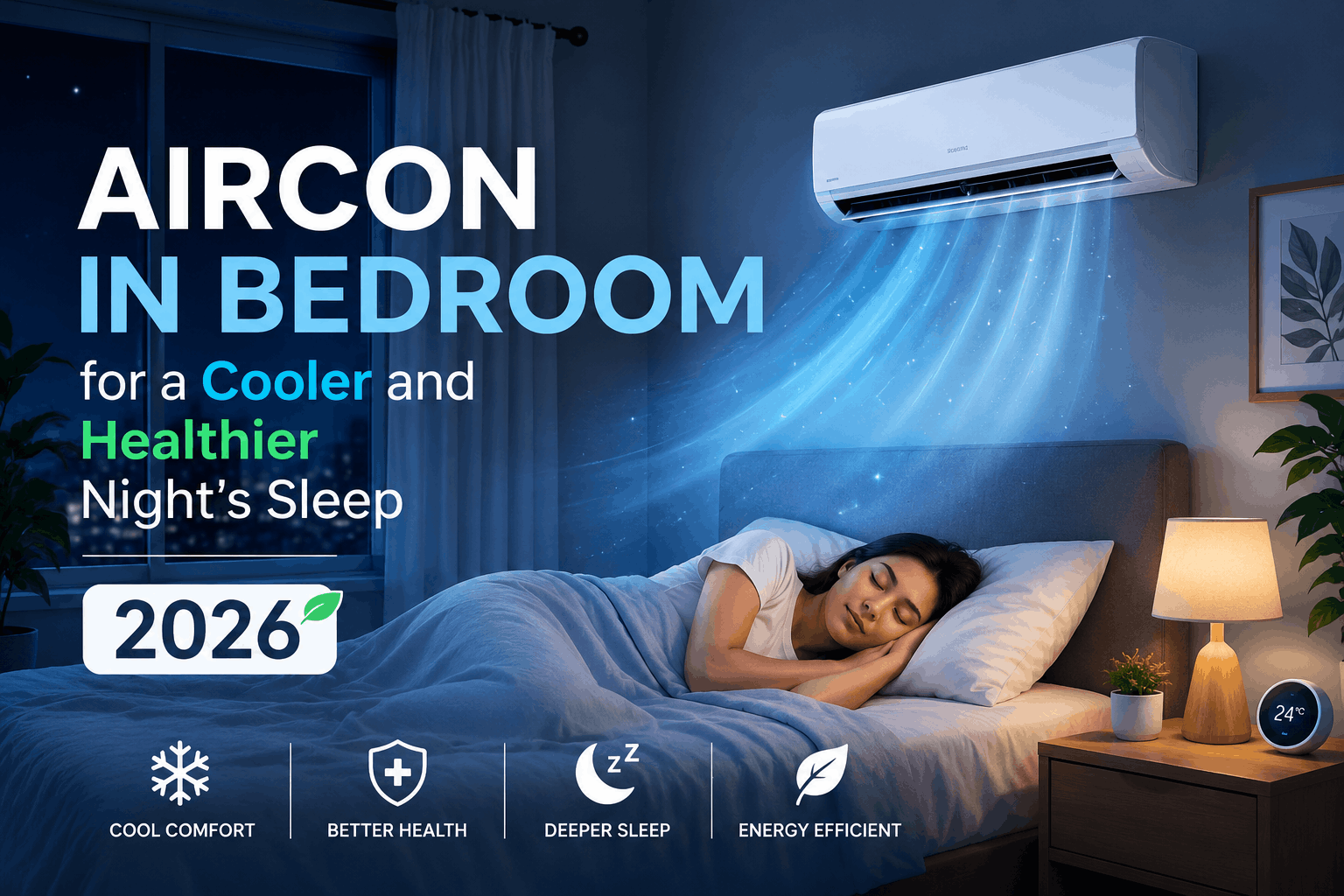
An Aircon in Bedroom can affect your quality of sleep more than anything else. No matter where you reside—whether it be a tropical environment or even a scorching summer season—the need to have an aircon in your bedroom is no longer considered a luxury but has now become a necessity in millions of homes worldwide. With the right installation of an aircon in your bedroom, sleeping has never been easier!
Table of Contents
This comprehensive guide walks you through every aspect of selecting, positioning, and maintaining an aircon in your bedroom — covering everything from capacity and placement to energy efficiency and nighttime settings. Whether you are buying your first unit or upgrading an existing one, this article has everything you need to make an informed decision.
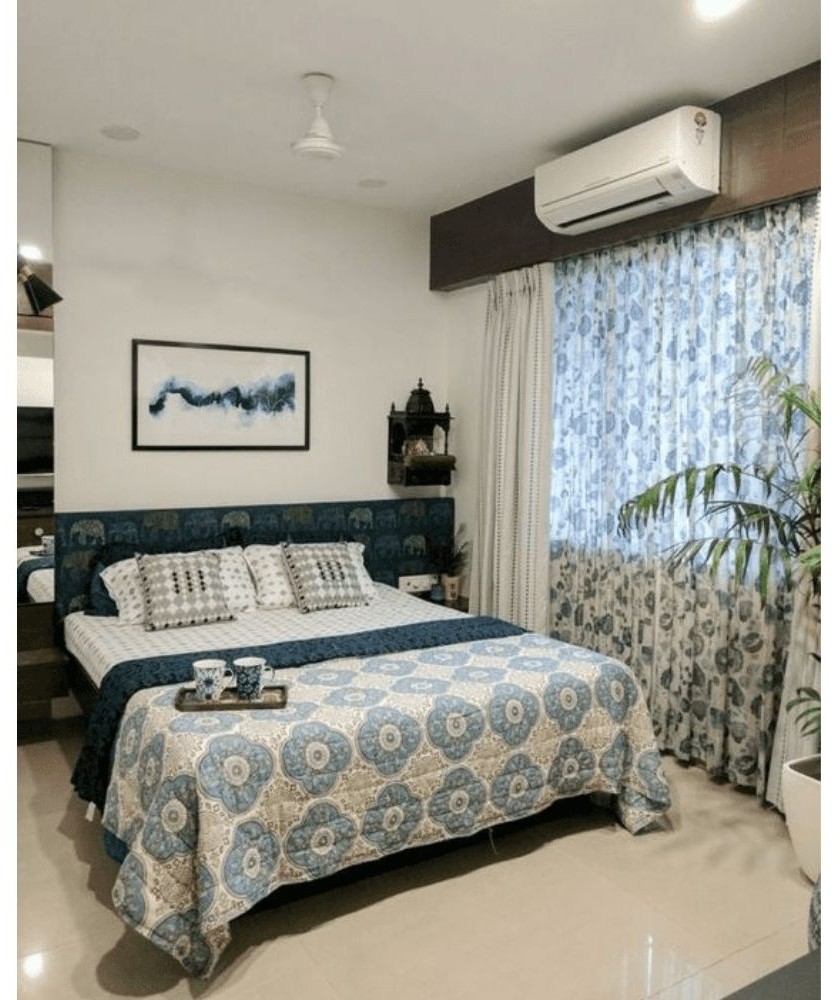
A neatly installed wall-mounted aircon in this cosy bedroom keeps the space comfortable without overwhelming the decor.
Why an Aircon in the Bedroom Makes a Real Difference
Sleep science is clear on one thing: your body needs to drop its core temperature slightly to enter and maintain deep sleep. When the ambient temperature in your bedroom is too high, that process is disrupted. You toss, you turn, you wake up exhausted. An aircon in the bedroom directly addresses this by maintaining the room at an ideal sleeping temperature — typically between 18°C and 22°C (64°F–72°F).
Beyond sleep quality, a bedroom aircon also reduces humidity. High humidity encourages mould growth, dust mites, and other allergens that can trigger respiratory issues. Running the aircon at a moderate temperature with dehumidification mode keeps the air cleaner and safer — especially important for anyone with asthma or allergies.
“The right aircon in your bedroom is not just about comfort — it is an investment in your sleep health, your energy levels, and your long-term wellbeing.”
Aircon in Bedroom vs. Ceiling Fan: Which Should You Choose?
A common question homeowners face before installing an aircon in the bedroom is whether a ceiling fan could do the job just as well. The honest answer is: it depends on your climate and budget.
A ceiling fan does not lower the actual air temperature — it only moves air across your skin, creating a wind-chill effect that makes you feel cooler by a few degrees. In mild climates or during cooler months, this is often enough. But in hot and humid regions, a fan alone cannot bring the room down to the 18°C–22°C range that supports deep sleep, and it does nothing to reduce humidity.
The best approach for many bedrooms is actually a combination of both: run the aircon at a slightly higher setting (say, 23°C–24°C instead of 20°C) with a ceiling fan on low speed. The fan helps distribute the cooled air more evenly around the room, which means the aircon cycles less often — often cutting energy use by 15–20% without sacrificing comfort.
| Factor | Aircon Alone | Ceiling Fan Alone | Aircon + Fan Combo |
|---|---|---|---|
| Lowers actual temperature | Yes | No | Yes |
| Reduces humidity | Yes | No | Yes |
| Running cost | Moderate–High | Very Low | Moderate |
| Best for | Hot/humid climates | Mild climates | Most bedrooms year-round |
Choosing an Aircon by Bedroom Climate
Not every bedroom faces the same cooling challenge, and the “right” aircon setup in a dry desert climate looks very different from one in a humid tropical region.
Tropical and humid climates: Prioritize dehumidification mode and a unit with a higher latent cooling capacity, since the main discomfort comes from moisture in the air as much as heat itself. Cassette or high-capacity split systems tend to perform best here.
Hot, dry climates: Standard cooling mode is usually sufficient, and dehumidification is less critical. Look instead for strong airflow and a unit that can maintain temperature even during extreme daytime highs.
Temperate climates with seasonal extremes: A reverse-cycle (heat pump) split system is worth the extra cost, since it can warm the bedroom in winter and cool it in summer — avoiding the need for a separate heater.
Choosing the Right Type of Aircon for Your Bedroom
Not all air conditioners are created equal, and the type you choose for your bedroom matters enormously. The most popular option for bedrooms is the split-system aircon, which consists of a compact indoor unit mounted on the wall and an outdoor compressor unit. This type is whisper-quiet, efficient, and ideal for bedroom environments where noise is a concern.
Window or portable aircon units are another option — particularly suitable for renters who cannot install a fixed system. While they tend to be noisier than split systems, modern portable units have improved significantly in both performance and noise levels.
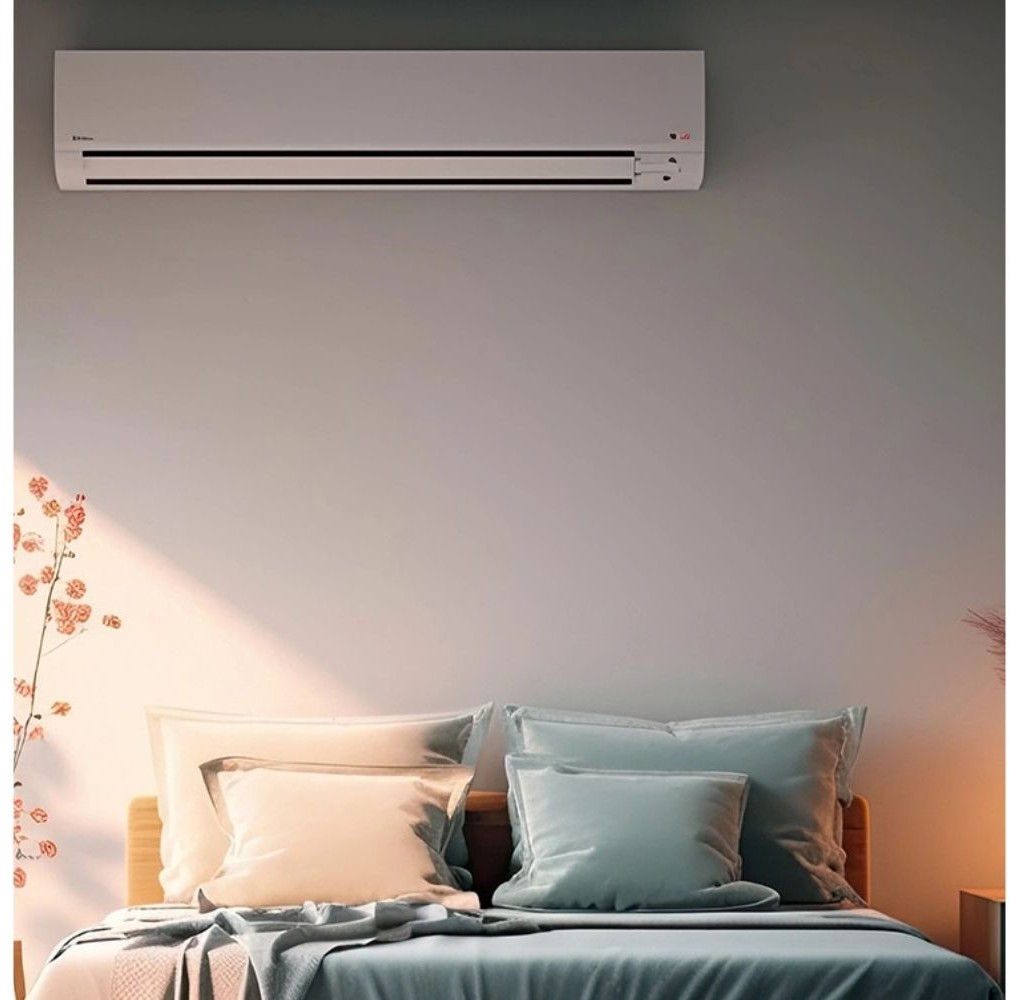
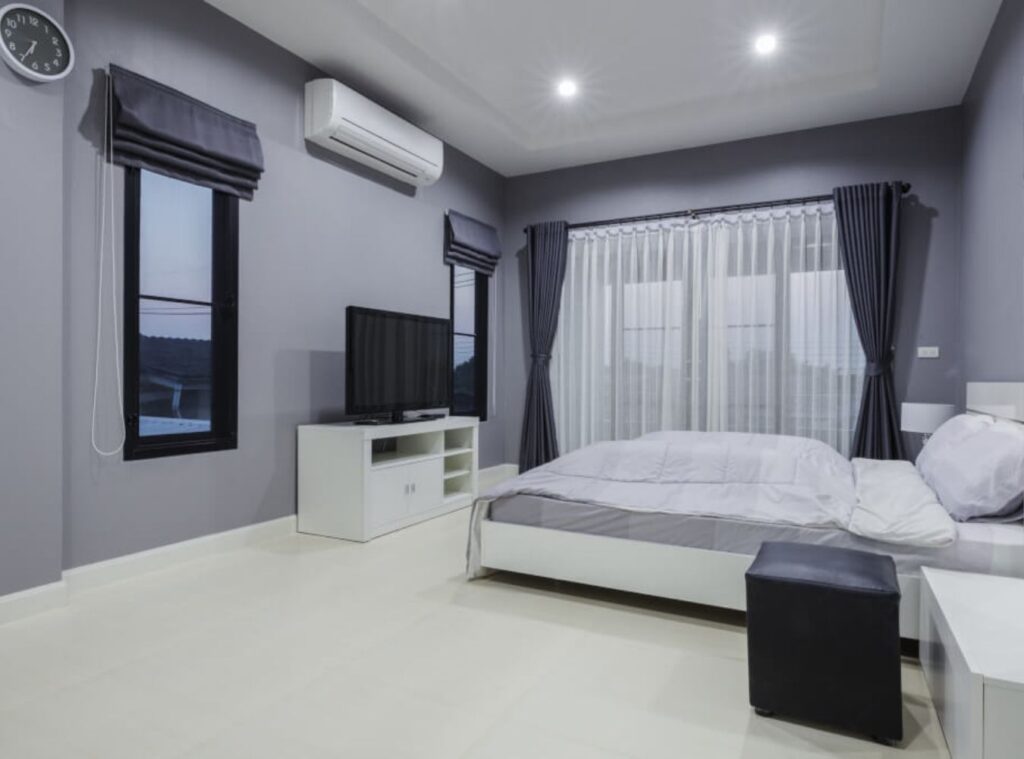
Cassette aircons — mounted into the ceiling — are another elegant solution for larger master bedrooms. They distribute air evenly in four directions, eliminating the common problem of uneven cooling. If you are designing a new bedroom or undertaking a renovation, a cassette unit may be worth considering for its clean, unobtrusive appearance.
Sizing Your Aircon Correctly
One of the most common mistakes homeowners make when installing an aircon in the bedroom is choosing a unit that is either too small or too large for the space. An undersized unit will struggle to cool the room and run continuously, driving up electricity costs. An oversized unit will cool the room too quickly without properly dehumidifying the air, leaving the room feeling cold but clammy.
The approximate size needed for an aircon depends on the area of your room, namely, about 150 watts (or 500 BTU) per square meter of the floor. The average 12 square-meter bedroom would normally need a 1.5 to 2 ton aircon. Nevertheless, there might be other considerations that would affect the required capacity.
💡 Pro Tip
Look for an aircon with an inverter compressor. Inverter units adjust their speed continuously rather than switching on and off, which results in up to 40% lower energy consumption and significantly quieter operation — ideal for bedroom use.
Where to Position the Aircon in Your Bedroom
Placement is just as critical as the unit itself. A poorly positioned aircon in the bedroom can result in direct draughts on the sleeper, uneven temperature distribution, or excessive condensation on walls and furniture. The ideal installation position for a wall-mounted split system is on the wall opposite or perpendicular to the bed, mounted approximately 2.1–2.4 metres from the floor.
This height allows the cool air to cascade down gently across the room without blowing directly onto the people sleeping. Direct aircon airflow on the body throughout the night can cause dry skin, sore throats, and stiff muscles — problems that are entirely avoidable with correct positioning
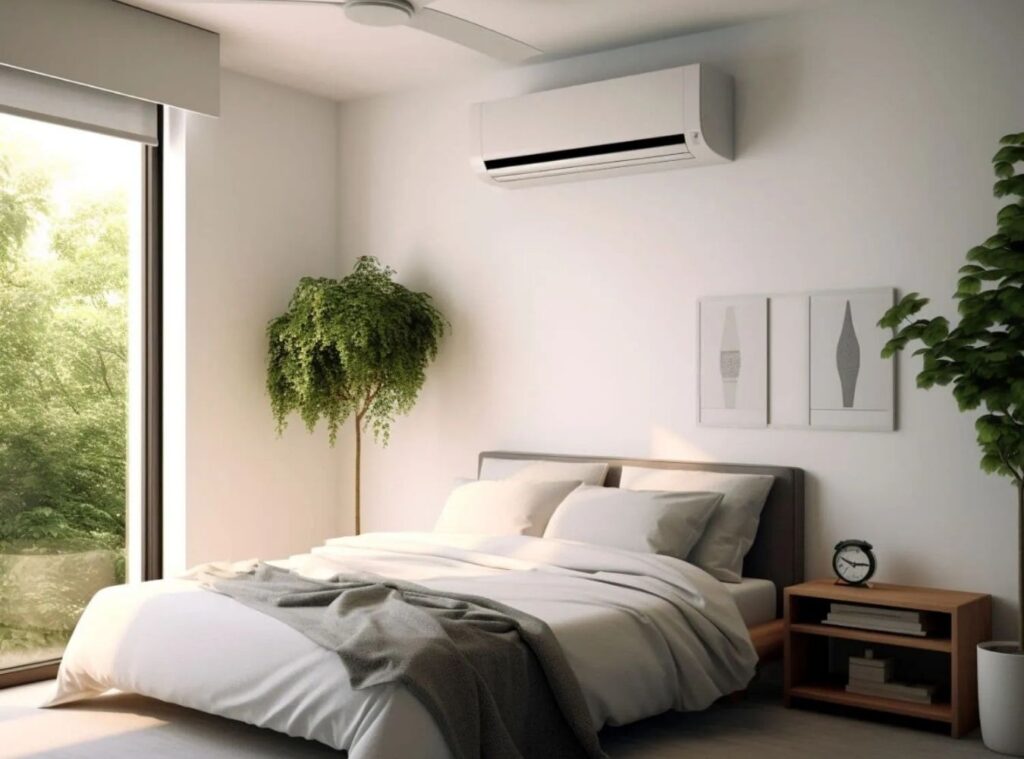
Combining an aircon with a ceiling fan in the bedroom allows for gentler air circulation and more even cooling throughout the night.
Also ensure that the aircon unit is not installed directly above the bed or above wooden furniture that may be damaged by condensation. Leave adequate space — at least 15–20 cm — on all sides of the indoor unit for proper airflow and easy access for filter cleaning. The outdoor compressor unit should be placed in a shaded, well-ventilated area away from direct sunlight for maximum efficiency.
The Best Temperature Settings for Sleeping
Once your aircon in the bedroom is installed, understanding how to set it correctly for sleep makes a significant difference. Most sleep experts recommend a bedroom temperature between 18°C and 22°C. Setting your aircon to around 20°C is a safe starting point, though personal preference and the season will influence your ideal setting.
Most modern split-system aircons include a sleep mode or quiet mode — a function specifically designed for bedroom use. Sleep mode gradually raises the temperature by half a degree every hour through the night (typically increasing by 1–2°C over the full night cycle), mimicking the natural rise in ambient temperature that the body expects as it approaches morning. This feature conserves energy and prevents you from waking up cold in the early hours.
Bedroom Aircon Sleep Settings Checklist
- Set temperature between 18°C–22°C for optimal sleeping conditions
- Activate Sleep Mode or Quiet Mode for gradual temperature adjustment
- Use Auto Fan Speed to let the unit manage airflow automatically
- Set a timer to switch off after 6–8 hours if you do not use sleep mode
- Enable dehumidification mode in humid climates to reduce moisture
- Point the airflow louvres toward the ceiling, not directly at the bed
Energy Efficiency and Running Costs
A concern many homeowners have about running an aircon in the bedroom throughout the night is the cost. The good news is that modern energy-efficient aircon units with inverter technology have dramatically reduced overnight running costs compared to older models. A 2-tonne inverter unit running on sleep mode for 8 hours typically consumes between 1.2 and 1.8 kWh per night — a relatively modest expense when weighed against the health and comfort benefits.
To lower costs further, one must ensure that the bedroom doors and windows remain shut when using the air conditioner. With heavy curtains or blackout blinds that will prevent solar radiation from heating the room during the day, there is much less work for the air conditioner to do at night. Insulating the ceiling would be another very efficient long-term investment in terms of energy savings.
When purchasing an air conditioner for bedrooms, it is advisable to purchase models with high EER (Energy Efficiency Ratio) or SEER (Seasonal Energy Efficiency Ratio). The higher the ratio is, the more efficient the unit will be at providing cooling while consuming less power. Government energy labels help compare different units easily in many nations.
How Noisy Is Too Noisy? Understanding dB Ratings
Noise is one of the most overlooked factors when selecting an aircon in the bedroom, yet it directly affects sleep quality. Indoor units are rated in decibels (dB), and the difference between models can be significant:
- Below 20 dB – Whisper-quiet; comparable to rustling leaves. Found in premium inverter split systems on their lowest fan setting.
- 20–30 dB – Quiet; similar to a soft conversation at a distance. This is the ideal range for bedroom use.
- 30–40 dB – Noticeable but tolerable for most sleepers; typical of mid-range window or portable units.
- Above 40 dB – Comparable to normal conversation volume; likely to disturb light sleepers over a full night.
When comparing units, check the manufacturer’s spec sheet for the dB rating at the lowest fan speed, not the average — that lowest figure is what you will actually hear once the room reaches temperature and the unit throttles down.
Is It Safe to Sleep With an Aircon Running All Night for Babies and Pets?
Bedrooms shared with infants, young children, or pets need a slightly different approach to aircon settings.
For infants, the recommended sleeping temperature is marginally warmer than for adults — around 20°C–22°C — since babies cannot regulate body temperature as efficiently. Avoid pointing airflow directly at the crib, and skip aggressive dehumidification, as very dry air can irritate a baby’s respiratory passages.
For pets, particularly dogs and cats with thick coats, a slightly warmer setting (around 22°C–24°C) is usually more comfortable than the human-optimal range. Watch for signs of a pet seeking out warmer corners of the room, which often signals the temperature is too low for them.
In both cases, a programmable thermostat or smart aircon that allows scheduled temperature increases toward early morning (similar to sleep mode) helps avoid overcooling during the coldest pre-dawn hours.
Smart and WiFi-Enabled Bedroom Aircons
Newer aircon models increasingly include smart connectivity features that are particularly useful in a bedroom setting:
- Scheduling – Set the unit to switch on 30 minutes before bedtime so the room is already at temperature when you get in, rather than running it while you sleep.
- Geofencing – Some smart units automatically switch off when your phone (and therefore, presumably, you) leaves the house, and switch back on as you approach home.
- Voice control integration – Adjust temperature without getting out of bed via Alexa, Google Assistant, or a manufacturer’s own app.
- Usage reporting – Many apps track nightly energy consumption, making it easy to spot a unit that is gradually losing efficiency before it becomes a noticeable problem.
These features rarely justify buying a new unit outright, but they are a worthwhile consideration when you are already due for a replacement.
Troubleshooting Common Bedroom Aircon Problems
The room cools but never quite reaches the set temperature. This usually points to a dirty filter restricting airflow, or a refrigerant level that has dropped due to a slow leak. Clean the filter first; if the issue persists, it’s time to call a technician.
The unit cools well but the room still feels damp. This is often a sign the aircon is oversized for the room — it cools the air quickly but shuts off before it has run long enough to properly remove humidity. Switching to dehumidify mode, or running the unit on a lower fan speed for longer cycles, typically resolves this.
Water dripping from the indoor unit. This is commonly caused by a blocked condensate drain line. It’s a simple fix for a technician but should not be ignored, as it can lead to water damage to walls or flooring over time.
A sudden spike in your electricity bill with no change in usage habits. This is frequently the first sign of a failing compressor or a refrigerant leak, both of which force the unit to work harder to achieve the same cooling effect. Address it promptly, since compressor damage from continued low-refrigerant operation is far more expensive to repair than an early refrigerant top-up.
Maintaining Your Bedroom Aircon for Longevity
An aircon in the bedroom that is not properly maintained will gradually lose its efficiency, consume more power, and eventually break down. Regular maintenance is not complicated, but it must be consistent. The most important task is cleaning the filters — the mesh screens inside the indoor unit that capture dust, pollen, and other particles before they circulate through the air you breathe while sleeping.
If you have a bedroom aircon that is being used regularly during nighttime, it is best to clean the filters every two to four weeks. This entails removing the filter panel and washing the filters with water until clean and then reattaching them. This simple process can keep your unit as efficient as 90%.
A minimum of once or twice a year, it is advisable to call an aircon technician to conduct regular servicing on your air conditioning system. Servicing by a qualified person means cleaning the evaporator coil, testing the amount of refrigerant, inspecting the wiring connections, and checking the thermostat calibration.
Air Quality Features to Look For
The bedroom is where you spend roughly a third of your entire life. For this reason, the air quality features of your aircon in the bedroom deserve special attention. Many premium split-system models now include built-in air purification systems — HEPA-grade filters, activated carbon layers, and even UV-C sterilisation technology that neutralises bacteria and viruses in the air as it passes through the unit.
If you or a family member suffers from allergies, asthma, or other respiratory conditions, investing in a bedroom aircon with advanced filtration is a wise decision. The combination of precise temperature control and clean, filtered air creates a sleeping environment that can meaningfully improve respiratory health over time.
Common Mistakes to Avoid
Many people install an aircon in the bedroom and then unknowingly reduce its effectiveness through a handful of avoidable habits. Setting the temperature too low is perhaps the most common — not only does it waste energy, but temperatures below 18°C can disrupt sleep by triggering the body’s cold-stress response. Comfort, not cold, is the goal.
A third misconception involves failing to ensure that the bedroom door is closed when using the air conditioner. The door being open implies that the air conditioner is cooling not just your bedroom but other parts of the house as well. It makes the appliance work harder and less effectively. Likewise, exposing your outdoor air conditioner unit to direct sunlight in the afternoons will lower its efficiency, which means it might need to work harder to produce cold air.
Lastly, do not take any odd sounds coming from the air conditioning system in your bedroom lightly. If you hear rattle, hiss, or even grind, take care of the problem as soon as possible, before it becomes a more serious one.
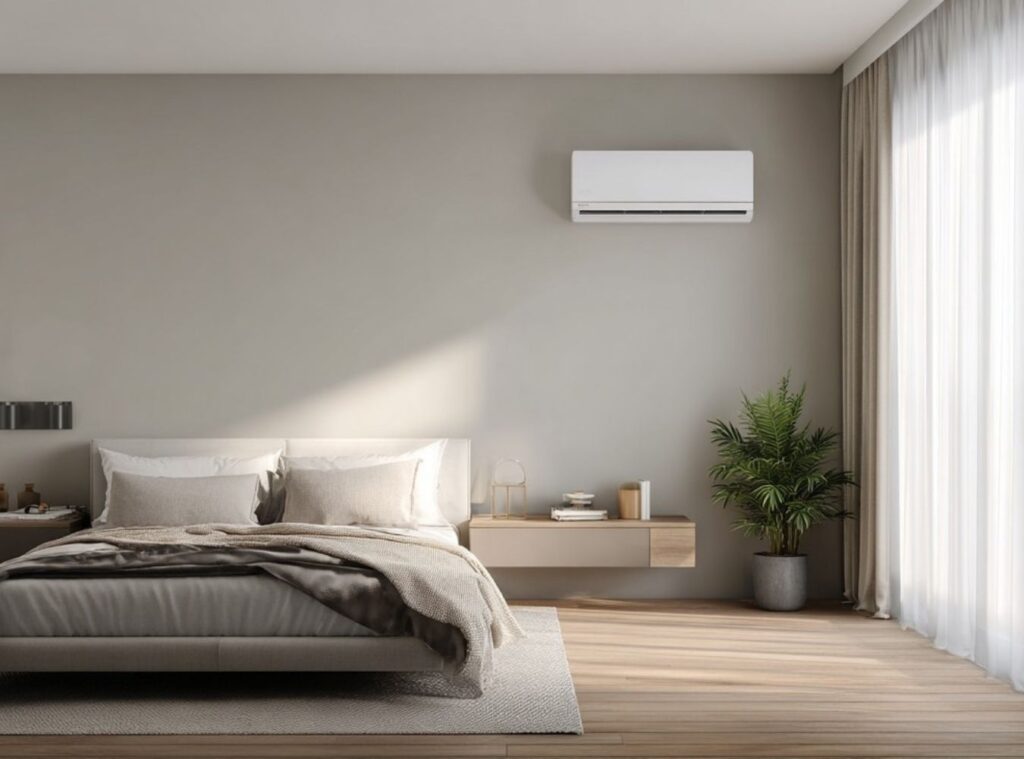
Clean lines and thoughtful placement make this bedroom aircon installation both functional and visually harmonious.
Final Thoughts: Making the Most of Your Bedroom Aircon
Investing in a quality aircon in your bedroom is one of the most impactful changes you can make to your home for health and comfort. With the right unit, the right placement, and the right settings, your bedroom becomes a genuine sanctuary — a consistently cool, quiet, and clean space designed entirely around the quality of your rest.
Take the time to choose a reputable brand with a solid warranty, have the unit professionally installed by a certified technician, and commit to a simple maintenance routine. The aircon in your bedroom will reward you with years of reliable, energy-efficient cooling and — most importantly — with the deep, restorative sleep that every person deserves.
Whether you are in the planning stages of a new home, renovating an existing bedroom, or simply replacing an ageing unit, the principles in this guide apply universally. A great bedroom aircon is not a complicated purchase — it just requires a little knowledge, a clear set of priorities, and the understanding that quality sleep is worth every cent of the investment.
FAQ
1: Is it healthy to sleep with an air conditioner on all night?
Yes, sleeping with an air conditioner on all night is generally safe and can improve sleep quality when used correctly. Keeping the room at a comfortable temperature, typically between 18°C and 22°C (64°F–72°F), can help your body maintain its natural sleep cycle.
2: What is the best temperature for sleeping with air conditioning?
Most sleep experts recommend setting your air conditioner between 18°C and 22°C (64°F–72°F). This range helps prevent overheating while promoting deeper, more restful sleep throughout the night.
3: Can air conditioning cause dry skin or allergies?
Air conditioning can reduce indoor humidity, which may lead to dry skin, dry eyes, or throat irritation in some people. Regularly cleaning air filters and using a humidifier when needed can help minimize these issues.
4: Does sleeping in an air-conditioned bedroom save energy?
Yes, modern air conditioners can be energy-efficient when used properly. Setting a moderate temperature, using sleep mode, and ensuring good insulation can reduce energy consumption while keeping your bedroom comfortable.
5: Should the air conditioner blow directly on the bed?
No, it is generally better to avoid direct airflow on your body while sleeping. Positioning the airflow away from the bed helps prevent discomfort, muscle stiffness, and excessive cooling during the night.
6.Does sleeping in an air-conditioned bedroom save energy compared to cooling the whole house?
Yes. Closing bedroom doors and cooling only the room you’re sleeping in — rather than running central air throughout the house overnight — typically reduces energy consumption significantly, since you are conditioning a much smaller volume of air.
7.How often should I replace my bedroom aircon rather than repair it?
As a general guideline, if a unit is more than eight to ten years old and requires a repair costing more than half the price of a new equivalent unit, replacement is usually the more economical choice — older units are also far less efficient than current inverter models.
8.Can an aircon in the bedroom help with snoring?
Indirectly, yes. Overheated, humid air can contribute to nasal congestion and dry throat tissue, both of which can worsen snoring. Maintaining cooler, dehumidified air can ease — though not eliminate — this issue for some sleepers.
9.Should I turn the aircon off completely during the day if I’m not in the bedroom?
For most well-insulated homes, turning it off during the day and letting it cool the room again in the evening uses less energy overall than maintaining a constant temperature — provided the room isn’t excessively exposed to direct sun, in which case a brief midday run to prevent heat buildup can be more efficient.

Lahiru N Gamage is the founder and editor of Modern Lifestyle Center, a lifestyle publication focused on home decor, interior design, beauty, fashion, garden inspiration, and modern living ideas. Through carefully researched articles and practical guides, he helps readers discover creative ways to improve their homes and everyday lifestyles.
Modern Lifestyle Center is committed to providing informative, trustworthy, and inspiring content designed to help readers create beautiful, comfortable, and functional living spaces.