If you’ve ever watched a child stir a “soup” of leaves, water, and dirt with total, focused joy, you already understand why the mud kitchen has become one of the most loved additions to backyards, preschools, and nature play areas around the world. A mud kitchen isn’t just a cute outdoor toy — it’s a hands-on invitation for kids to imagine, create, get messy, and connect with nature, all while quietly building skills that matter for years to come.
Table of Contents
In this guide, I’m sharing 10 of the best mud kitchen ideas I’ve come across (and tried myself), along with a personal story about how our own backyard mud kitchen changed our summer, practical building tips, and answers to the questions parents ask most. Whether you’re picturing a simple DIY mud kitchen made from scrap wood or a full-blown outdoor mud kitchen for kids with a sink, shelves, and a chalkboard menu, there’s an idea here for you.
Why a Mud Kitchen Is Worth Building
Before we get to the ideas, it helps to understand why mud kitchens have become such a staple of outdoor childhood. Unlike plastic toys with a single purpose, a mud kitchen is open-ended. There’s no “right” way to play in it, which means it grows with your child instead of being outgrown in a season.
A well-designed mud kitchen for toddlers encourages:
- Sensory exploration — the feel of wet mud, dry sand, smooth stones, and rough bark all in one place
- Imaginative play — mud pies become birthday cakes, puddle water becomes soup, leaves become salad
- Fine motor development — pouring, scooping, stirring, and mixing all strengthen little hands
- Language and social skills — kids narrate their cooking, negotiate roles, and “serve” family and friends
- A genuine love of the outdoors — something screens simply can’t replicate
My Own Mud Kitchen Story
Two summers ago, our backyard was mostly unused. My daughter, then three, wasn’t interested in her swing set anymore, and I was tired of the “I’m bored” refrain by 9 a.m. On a whim, I pulled apart an old wooden pallet, screwed on a discarded metal bowl as a sink, added a few mismatched pots from a thrift store, and called it done. It took one afternoon.
I honestly expected the novelty to wear off in a week. It didn’t. That simple DIY mud kitchen became the anchor of our entire summer. She invented a “restaurant” and insisted we order from her daily specials board (a plank of wood and a piece of chalk). Her younger cousin joined in, and soon they were collaborating on recipes, arguing gently about who got to use the “good” spoon, and staying outside for hours without a single complaint about boredom.
What struck me most wasn’t just how much fun she had — it was what she was learning without realizing it. She was measuring, comparing textures, problem-solving when the “soup” was too watery, and using new vocabulary like “simmer,” “whisk,” and “recipe.” That one weekend project ended up being one of the best things we ever built for her.
If you’re on the fence about whether it’s worth the effort, I can say from experience: it is.
10 Mud Kitchen Ideas to Inspire Your Build
Here are 10 standout mud kitchen ideas, ranging from simple starter builds to more elaborate backyard centerpieces.
1. The Classic Pallet Mud Kitchen
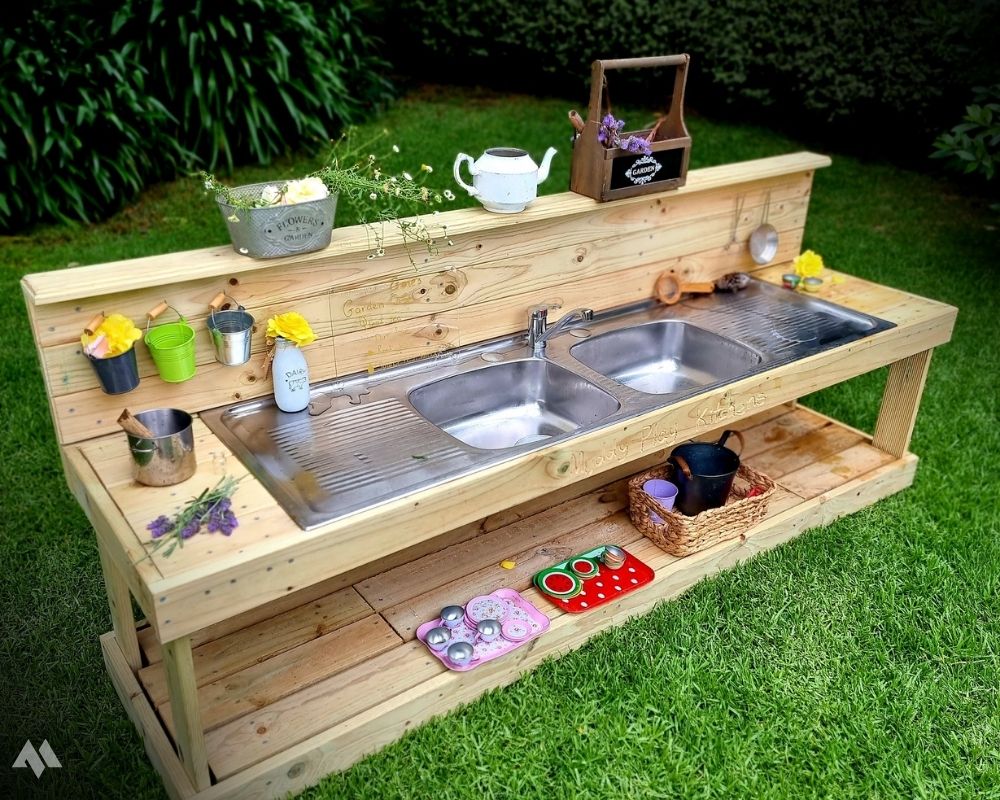
The most popular starting point for any DIY mud kitchen is a repurposed wooden pallet. Stood on its end, a pallet naturally creates shelving and a frame for a countertop. Add a sink basin, a few hooks for utensils, and a lower shelf for pots, and you have a sturdy, budget-friendly kitchen that costs next to nothing if you already have the pallet.
2. The Sink-and-Tap Mud Kitchen
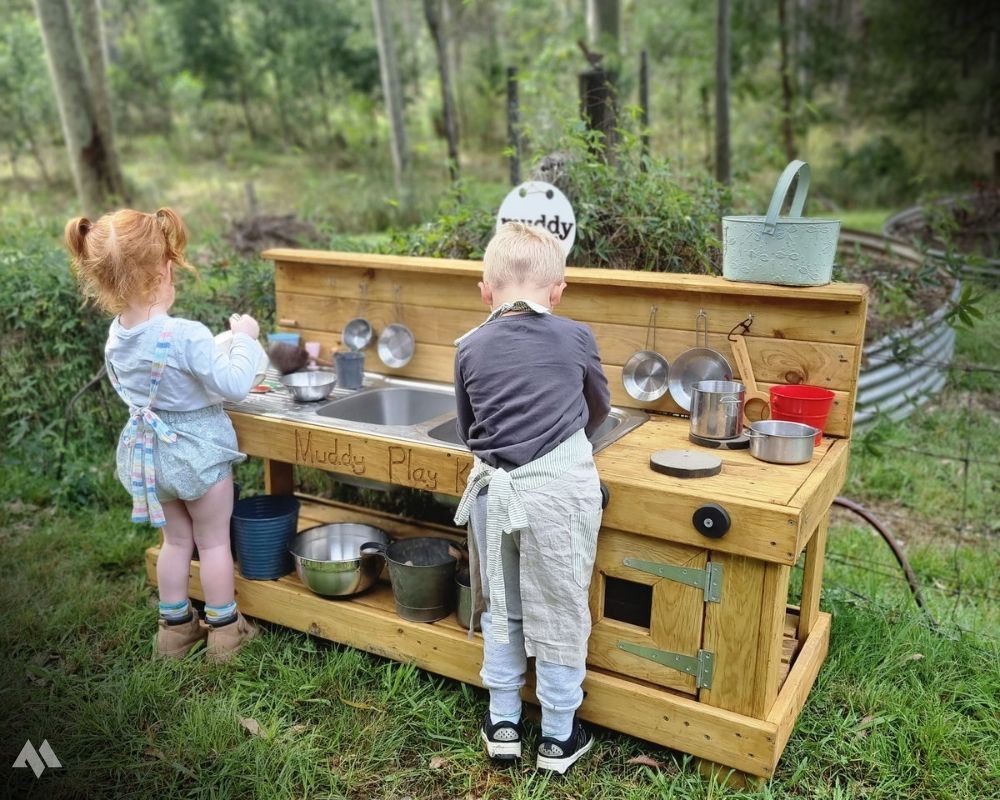
For kids who love realistic play, adding a real (non-plumbed) sink basin with a manual pump or a connected garden hose takes the experience to another level. Kids can “wash” dishes, fill pots, and mix potions with actual running water, which adds a satisfying sensory element that dry play can’t match.
3. The Tire-Base Mud Kitchen
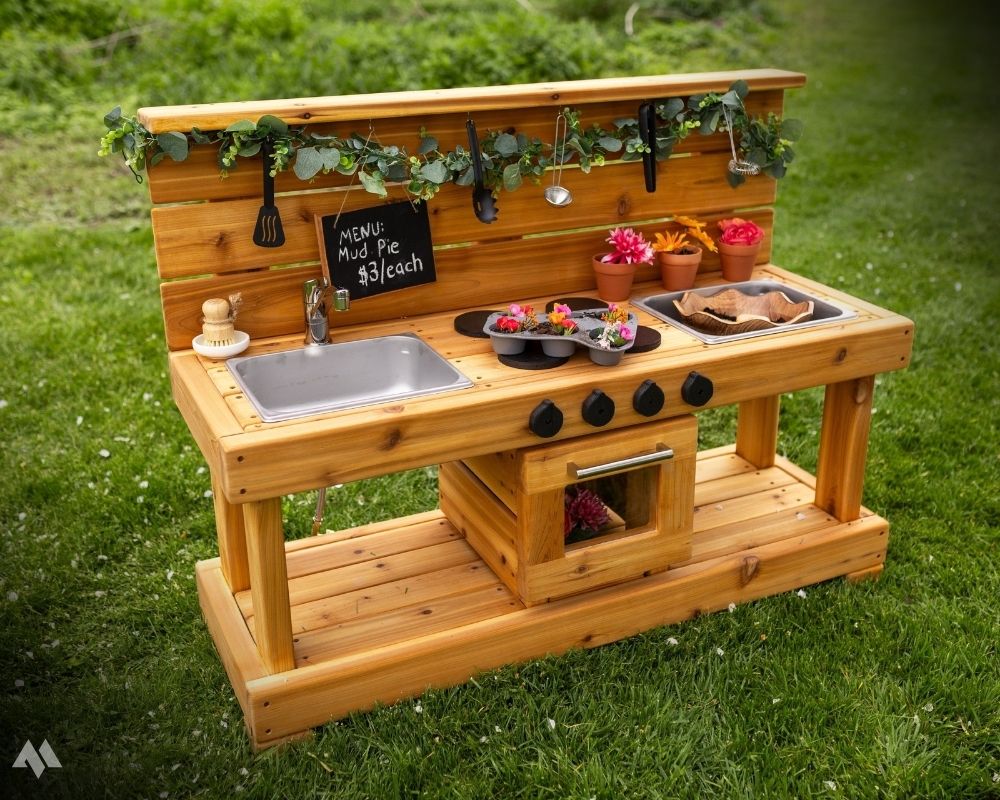
Old tires, painted and stacked, make an excellent low-cost base or stool set for a mud kitchen. They’re durable, weatherproof, and easy for small children to sit on or use as a mixing station. This is a great option if you’re building around materials you already have lying around the garage.
4. The Chalkboard Menu Kitchen
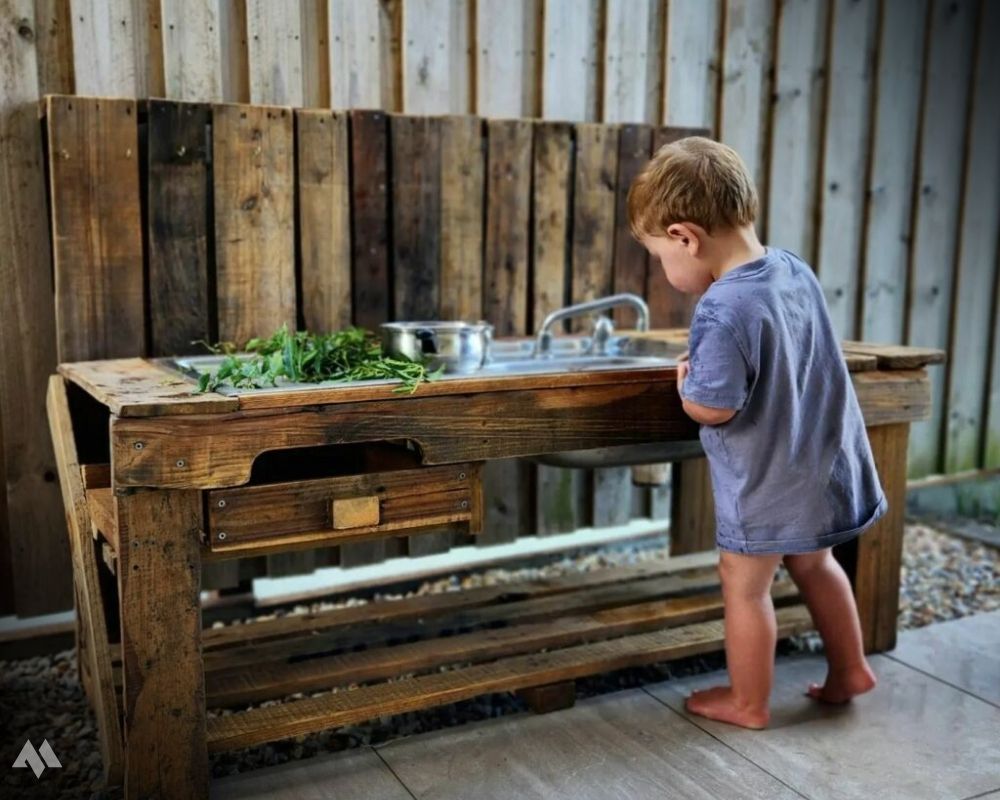
Attaching a small chalkboard panel to the kitchen instantly turns playtime into a game of pretend restaurant. Kids can “write” (or scribble) daily specials, take orders from parents and siblings, and practice early literacy skills as they draw and label their creations.
5. The Herb Garden Mud Kitchen
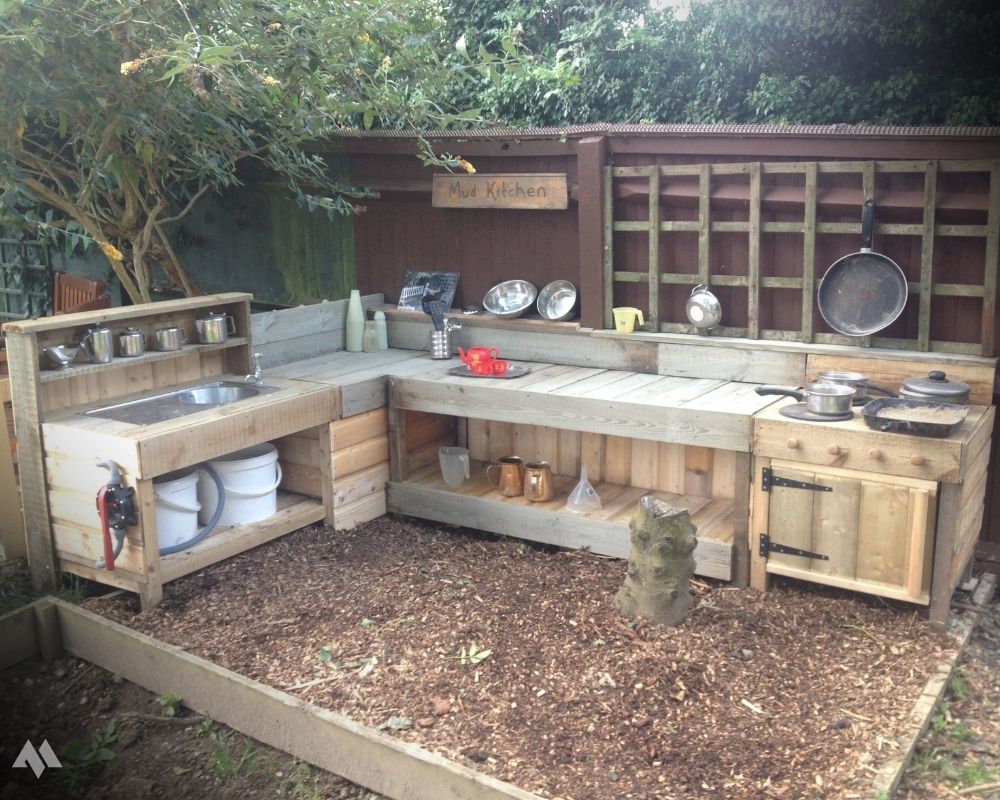
Planting a small herb garden — mint, rosemary, chives — right next to the kitchen lets kids “harvest” real ingredients for their mud recipes. It adds a wonderful sensory and educational layer, teaching children where flavors and scents come from while keeping the play grounded in something real.
6. The Roofed or Covered Mud Kitchen
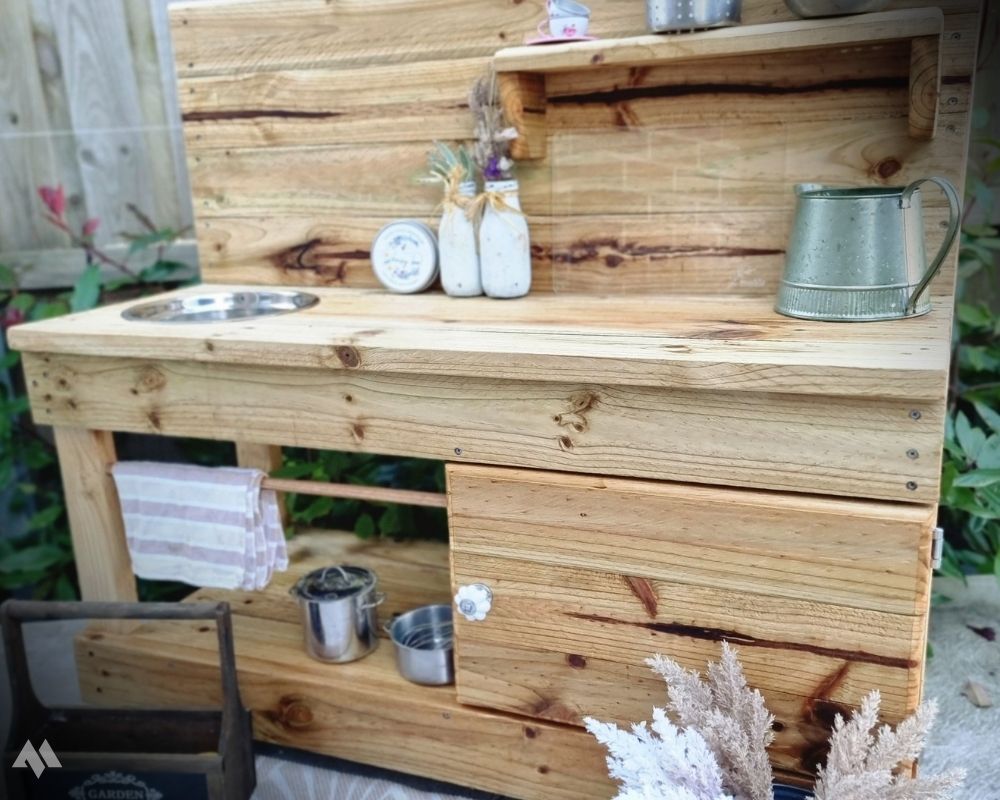
If you live somewhere with strong sun or frequent rain, adding a simple slanted roof (even a repurposed piece of corrugated metal or an old umbrella) extends the number of days your outdoor mud kitchen for kids can be used. It also protects wooden components from warping too quickly.
7. The Shelf-and-Storage Mud Kitchen
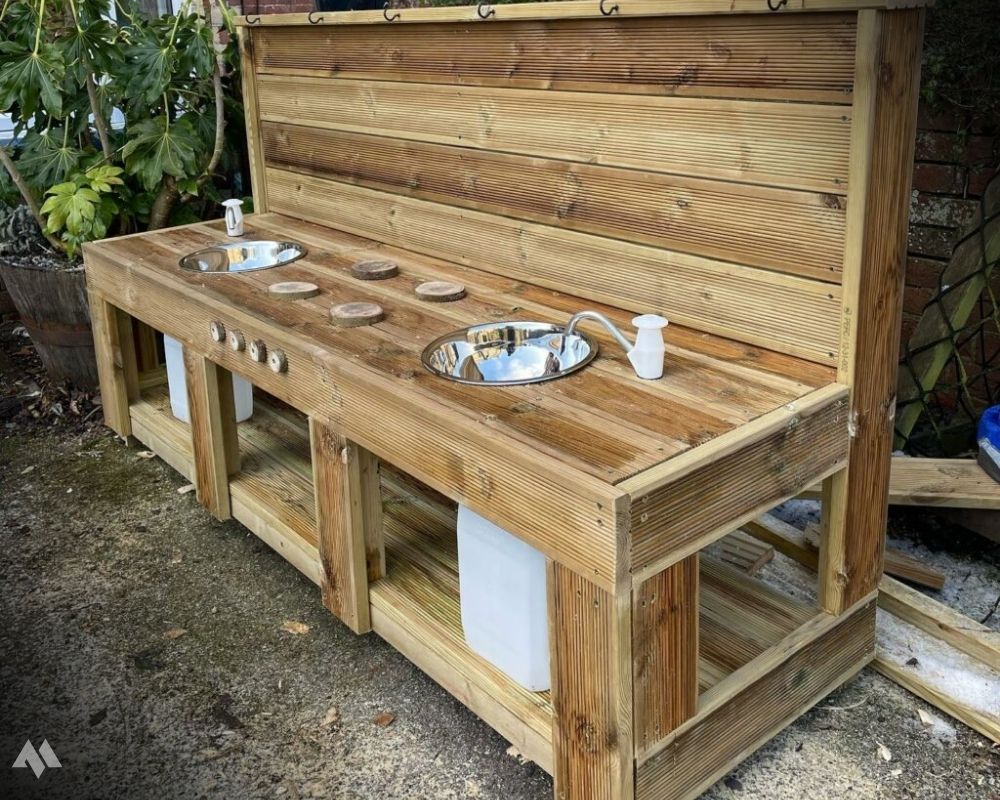
A mud kitchen with dedicated shelving for pots, pans, tins, and “ingredients” (pinecones, stones, leaves) teaches organization in a playful way. Kids learn to put things back after use, and it keeps loose parts from scattering across the yard.
8. The Recycled-Materials Mud Kitchen
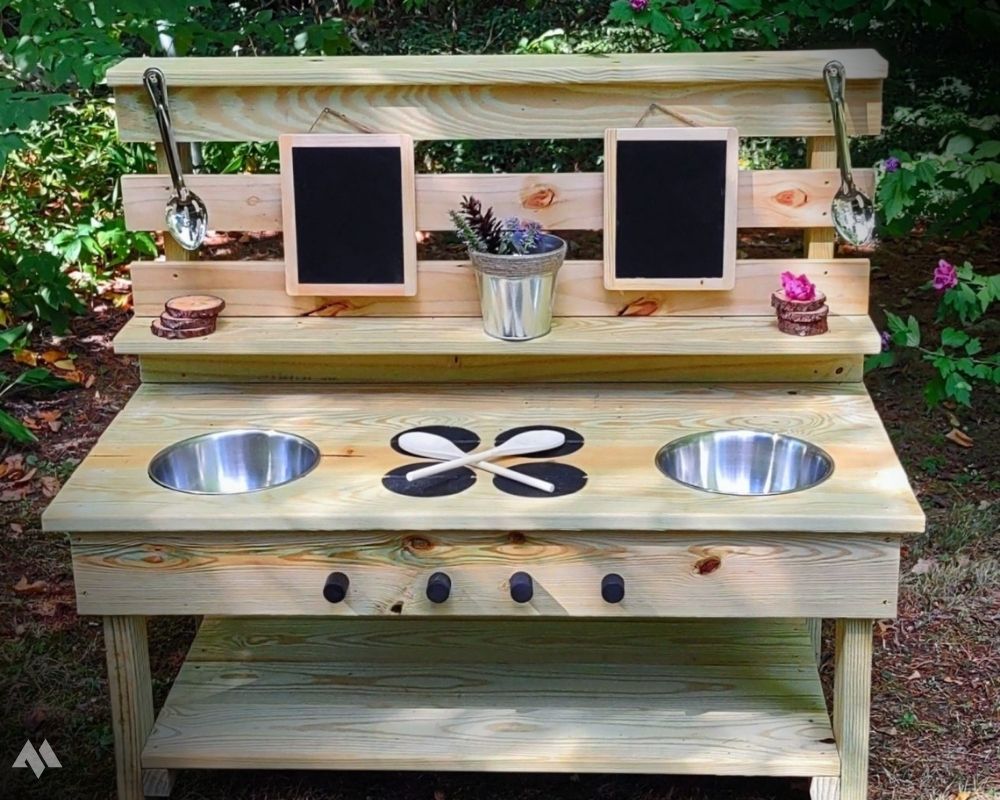
Old drawers, cabinet doors, colanders, muffin tins, and mismatched cutlery can all be repurposed into a fully functional mud kitchen. This is one of the most affordable and eco-friendly approaches, and it often results in the most character-filled, unique builds.
9. The Compact Balcony or Patio Mud Kitchen
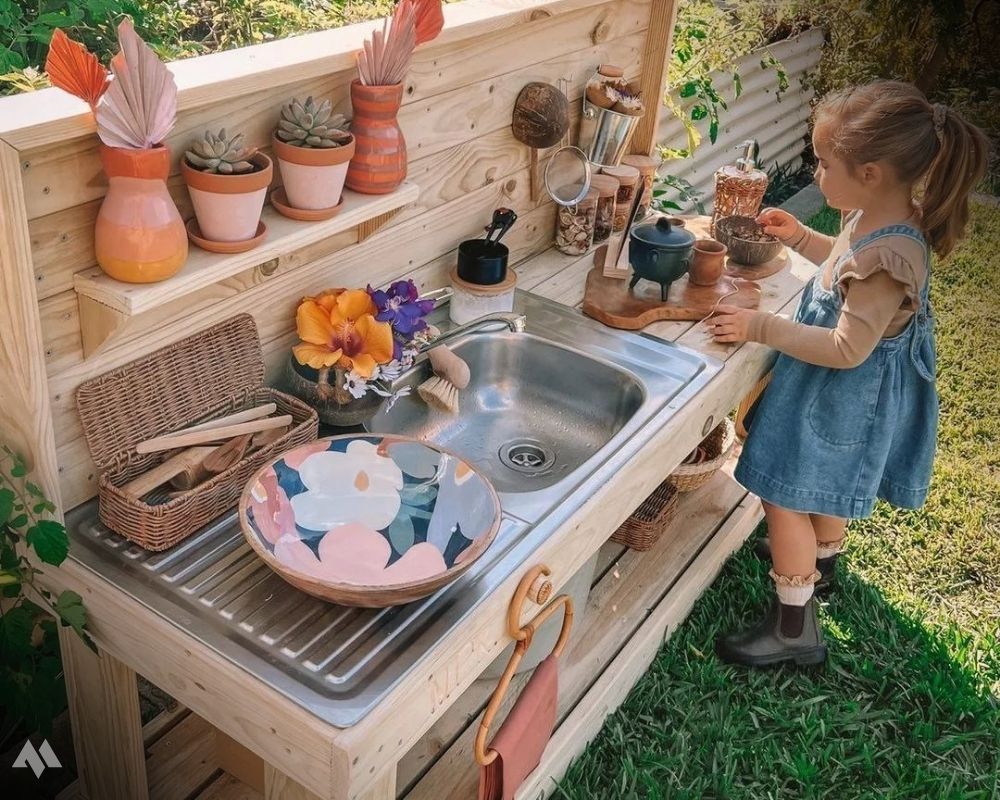
Not everyone has a big backyard. A compact version — a small table with a single basin and a couple of hooks — can fit on a balcony or patio, proving that even a small mud kitchen for toddlers can deliver the same sensory and imaginative benefits as a larger one.
10. The Multi-Station Play Kitchen
For families with the space and ambition, combining a mud kitchen with a sand pit, a water table, and a small vegetable patch creates an entire outdoor “cooking and gardening” zone. This setup is ideal for playgroups, preschools, or households with multiple children who each want their own space to create.
The Developmental Benefits Behind the Mess
It’s easy to dismiss mud kitchen play as “just messing around,” but early childhood educators have long championed loose-parts and nature-based play for good reason. When a child stirs a pot of leaves and water, they’re actually engaging in a surprisingly complex mental exercise: estimating quantities, predicting outcomes, adjusting a “recipe” that doesn’t behave as expected, and communicating their process to anyone nearby.
Occupational therapists often point to mud play as a low-pressure way to build hand strength and coordination — the exact muscles later used for holding a pencil or using scissors. Meanwhile, the unstructured nature of an outdoor mud kitchen for kids means there’s no wrong answer, no losing, and no adult correcting the “recipe.” That freedom from judgment is part of what makes the play so calming and confidence-building for young children.
There’s also a quieter benefit worth mentioning: mud kitchens get kids used to weather, texture, and the natural rhythm of the outdoors. Rain isn’t a nuisance — it’s an ingredient. Cold mud, warm sun, and the smell of crushed mint leaves all become part of a sensory vocabulary that stays with children well beyond their preschool years.
Choosing the Right Spot in Your Yard
Where you place a mud kitchen matters almost as much as how you build it. A few things to consider before you settle on a spot:
- Proximity to a water source. Whether it’s a garden hose, a rain barrel, or just a bucket you refill by hand, being close to water saves constant back-and-forth trips.
- Shade versus sun. A spot with partial shade keeps both the kitchen and the kids cooler during long summer play sessions, while still allowing enough light for herbs or flowers planted nearby.
- Drainage. Avoid low spots where water pools after rain, since a permanently soggy patch of ground can quickly become unpleasant rather than fun.
- Visibility from the house. Especially for a mud kitchen for toddlers, being able to keep an eye on play from a kitchen window or porch makes supervision far easier.
A Simple Weekend Build: What You’ll Need
If the 10 ideas above have you ready to start, here’s a basic materials list that covers most of the builds mentioned:
- One wooden pallet or a small secondhand table as the base frame
- A metal or plastic basin to act as the sink
- A few mismatched pots, pans, and spoons (thrift stores and garage sales are goldmines)
- Screws, a drill, and basic hand tools
- Weatherproof paint or sealant, if you want the kitchen to last through multiple seasons
- Optional extras: a chalkboard panel, hooks for hanging utensils, a small planter box for herbs, or a scrap piece of roofing material
None of these items need to be new or expensive. Part of the charm of a DIY mud kitchen is that it’s built from what you already have, which keeps the project both affordable and environmentally friendly.
Adapting Mud Kitchen Ideas by Age
Not every idea on this list suits every age group equally, so here’s a rough guide:
- Toddlers (1–3 years): Keep it simple — a low table, one basin, a couple of unbreakable containers, and soft mud rather than thick clay-like mud. Supervision should be constant at this stage.
- Preschoolers (3–5 years): This is where chalkboard menus, herb gardens, and pretend “recipes” really take off, since language and imaginative play are developing quickly.
- School-age kids (6+): Multi-station setups, more elaborate tools, and even simple “measuring” with real cups and spoons can turn play into an early lesson in basic math and science.
Simple Tips Before You Build
- Use weather-resistant materials where possible, since the kitchen will live outside year-round.
- Keep the height child-appropriate — a kitchen that’s too tall discourages independent play.
- Add texture variety — sand, mud, water, leaves, and stones together open up more imaginative possibilities than mud alone.
- Let it be imperfect. Some of the most-loved mud kitchens are the simplest, built from whatever materials were on hand.
Frequently Asked Questions
1. What age is a mud kitchen suitable for? Most children enjoy mud kitchens from around 18 months through age 8 or older, with the play evolving from simple sensory exploration in toddlerhood to detailed pretend cooking and storytelling in later years.
2. Is a mud kitchen messy to maintain? It can get messy, but that’s part of the appeal. Choosing a spot with good drainage, keeping a hose nearby, and accepting that muddy hands are part of the deal will make cleanup far easier for everyone.
3. Do I need to buy a kit, or can I build one myself? You absolutely can build one yourself. Many of the best mud kitchens are made from pallets, old furniture, or recycled materials, and a basic version can be built in an afternoon with simple tools.
4. What ingredients do kids actually use in mud kitchen play? Common “ingredients” include mud, water, sand, leaves, flower petals, pinecones, twigs, and small stones. Adding a few real herbs or vegetable scraps can make the play even richer.
5. Is a mud kitchen safe for kids to use unsupervised? Young children should always be supervised near water and mud kitchens, particularly if a sink basin holds standing water. Older children can generally use a mud kitchen more independently once safety habits are established.
6. How much does it cost to build a mud kitchen? Costs vary widely. A simple pallet-based version can cost close to nothing if you use recycled materials, while a more elaborate build with a real sink, roof, and shelving might cost more depending on the materials chosen.
Final Thoughts
A mud kitchen is proof that some of the best childhood experiences don’t come from screens, batteries, or expensive toy sets — they come from mud, water, imagination, and a bit of open space outdoors. Whether you build a simple pallet kitchen this weekend or plan out a multi-station outdoor play area over the summer, the payoff is the same: hours of genuine, joyful play, and a childhood memory your kids will carry with them long after the mud has washed off.
If our own backyard mud kitchen taught me anything, it’s this — sometimes the simplest builds create the biggest memories.

Lahiru N Gamage is the founder and editor of Modern Lifestyle Center, a lifestyle publication focused on home decor, interior design, beauty, fashion, garden inspiration, and modern living ideas. Through carefully researched articles and practical guides, he helps readers discover creative ways to improve their homes and everyday lifestyles.
Modern Lifestyle Center is committed to providing informative, trustworthy, and inspiring content designed to help readers create beautiful, comfortable, and functional living spaces.