I still remember the exact moment Bali stopped being “just another island on my bucket list” and became somewhere I genuinely fell in love with. I was standing on a cliff edge in Nusa Penida, salt wind messing up my hair, watching the turquoise water crash against limestone cliffs that looked like something out of a fantasy movie.
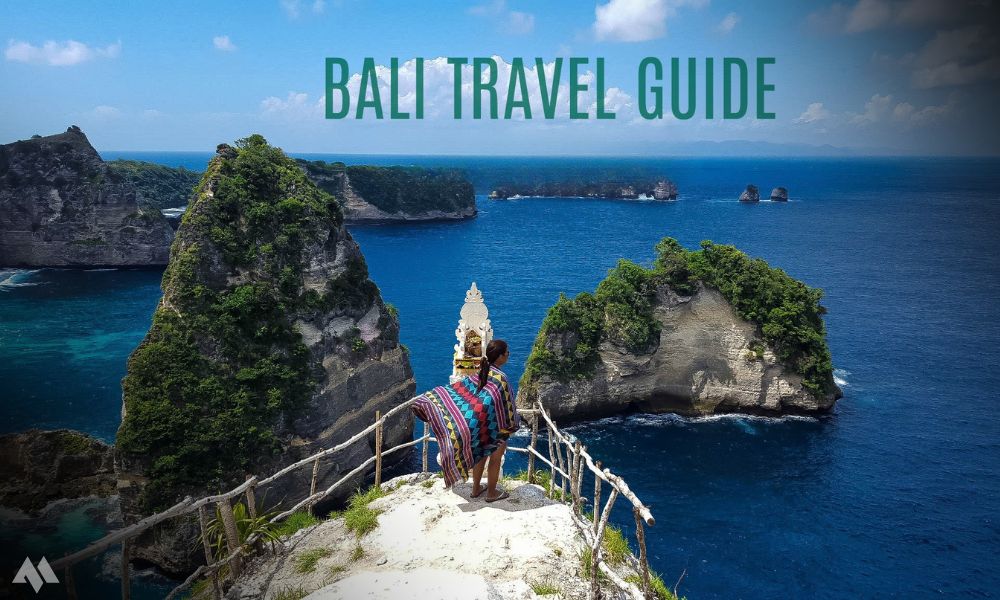
Table of Contents
I turned to my travel partner and said, “we should have come here years ago.” That single trip turned into three more over the following years, and by now I’ve made almost every mistake a first-time visitor can make — booked the wrong area to stay in, underestimated traffic in Kuta, overpaid for a scooter, and once nearly missed a flight because I didn’t account for Bali’s infamous gridlock near the airport.
This Bali travel guide is the one I wish someone had handed me before my first trip. It covers a realistic Bali itinerary, honest Bali budget travel tips, the best Bali beaches, and the temples and rice terraces that make the island feel almost spiritual. No fluff, no recycled “top 10” lists copied from a brochure — just what actually worked for me, and what I’d do differently.
Why Bali Deserves More Than a Week on Your List
Bali gets thrown around as a generic “tropical paradise” destination, but that undersells it. The island genuinely has different personalities depending on where you go. Ubud feels like a jungle retreat wrapped around ancient temples and rice paddies. Uluwatu and Canggu feel like a surfer’s dream with cliffside sunsets and beach clubs. Nusa Penida and Nusa Lembongan feel raw and undeveloped, like discovering a secret. And then there’s the Bali most people picture from Instagram — dramatic cliffs, floating temples on lakes, and terraced rice fields that look painted on by hand.
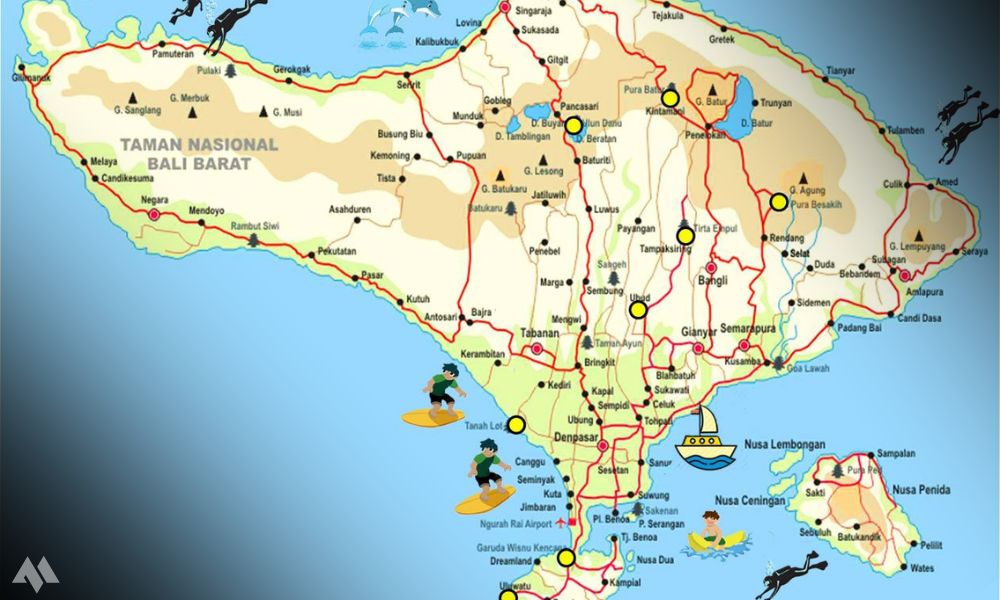
The map below is one I keep coming back to whenever I’m planning a new route around the island, because it shows just how spread out the highlights actually are — something a lot of first-timers don’t realize until they’re stuck in traffic trying to get from the north to the south in one day.
Building the Perfect Bali Itinerary(Bali Travel Guide)
One thing I learned the hard way: don’t try to “do” all of Bali from one hotel. The island is bigger and more spread out than it looks on a map, and traffic — especially around Denpasar, Kuta, and Seminyak — can turn a 20km drive into a 90-minute crawl. My advice is to break your trip into regions and move your base every 3–4 days.
Here’s the itinerary structure that has worked best for me over multiple trips, whether you have 7 days or 12:
Days 1–3: South Bali (Uluwatu, Ulu Watu cliffs, Canggu or Seminyak) Start here because most international flights land at Ngurah Rai Airport, which sits in the south. Use this stretch to shake off jet lag, get your bearings, and enjoy the beach clubs and cliffside sunsets Uluwatu is famous for. The Uluwatu Temple sunset performance is touristy, sure, but it’s touristy for a reason — watching the sun dip into the ocean behind a temple perched on a cliff is one of those moments that photos genuinely don’t do justice.
Days 4–6: Central Bali (Ubud) Next, head inland to Ubud. This is where the pace of the trip slows down. Rent a scooter (or hire a driver if you’re not confident on two wheels — Bali traffic is not the place to learn) and spend your mornings visiting rice terraces before the crowds arrive. I always tell people to go early, like 7am early, because by 10am the terraces are swarming with tour buses and the whole peaceful vibe disappears.
Days 7–9: Nusa Penida or Nusa Lembongan If you only add one side trip to your Bali itinerary, make it this one. A short speedboat ride takes you to a completely different world of dramatic cliffs, hidden beaches, and far fewer crowds. Kelingking Beach and Angel’s Billabong are the famous names, but honestly, just driving around the island and stopping wherever looks interesting was one of my favorite days in Bali, period.
Days 10–12: North Bali (Optional) If you have extra time, the north around Munduk and Lake Bratan is quieter, cooler (literally, it’s at higher elevation), and feels almost European in parts, with waterfalls and coffee plantations replacing the beach club scene entirely.
Bali Budget Travel: What Things Actually Cost
Bali has a reputation for being cheap, and in many ways it still is — but “cheap” depends entirely on how you travel. I’ve done both the backpacker version and the slightly more indulgent version, and the price difference is enormous.
On a tight Bali budget travel plan, you can realistically get by on $30–40 USD a day. That covers a private room in a guesthouse (around $10–15/night), local warung meals (think $2–4 per plate of nasi goreng or mie goreng), scooter rental (around $5/day), and entrance fees to temples and waterfalls (usually $1–3 each).
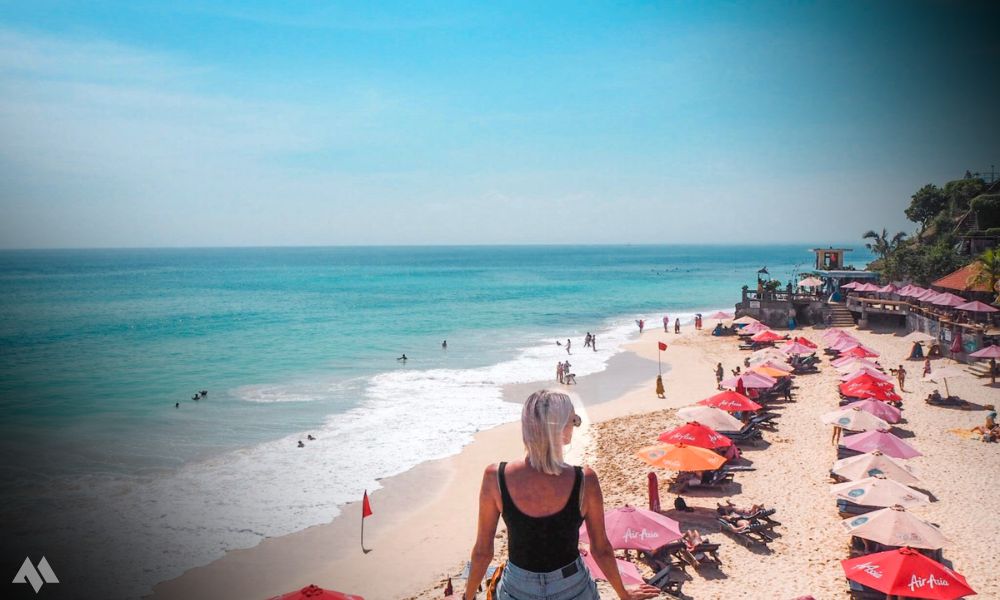
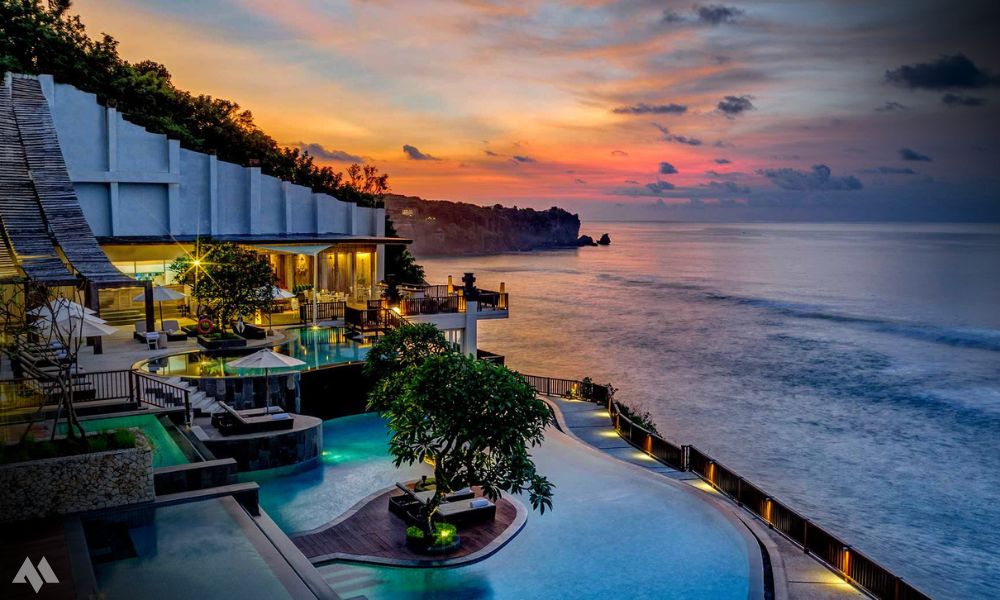
If you want a bit more comfort — a nice pool villa, the occasional beach club day pass, a few proper restaurant meals, and a driver instead of a scooter — budget $80–150 a day. And if you want the version from image four below, full luxury clifftop resort with an infinity pool that seems to spill into the ocean, you’re looking at $300+ a night just for accommodation, though even then it’s often a fraction of what similar luxury costs in Europe or the US.
A few money-saving lessons I picked up the hard way:
- Always negotiate scooter and driver rates for multi-day rentals; the sticker price is rarely final.
- Eat where locals eat. The nicest meal I had in Bali cost less than $3 at a tiny warung with plastic chairs, no menu, and a grandmother running the kitchen.
- Avoid exchanging money at the airport — the rates are noticeably worse than in town.
- Book beach clubs for the daytime “day bed” access rather than dinner reservations; you get the same views for a fraction of the cost.
The Beaches That Actually Live Up to the Hype
Bali’s beaches vary wildly depending on the region, and knowing which one matches your mood makes a huge difference. The white sand, resort-lined stretches of Nusa Dua are polished and calm, great for families. Kuta and Legian have the surf and the sunset crowds, but also the most tourist traffic. My personal favorites, though, are tucked into the Bukit Peninsula in the south — places like Padang Padang, Bingin, and Melasti, where limestone cliffs frame small coves of soft sand.
I’ll never forget an afternoon at one of these Uluwatu beach spots, red and white umbrellas lined up in neat rows, watching surfers paddle out while the tide slowly crept in. It’s the kind of scene that makes you stop checking your phone entirely, which for me is the real test of a good beach.
If you’re chasing that specific “editorial travel photo” aesthetic, this stretch of coast delivers it more consistently than almost anywhere else on the island.
Rice Terraces, Temples, and the Quiet Side of Bali
Bali’s spiritual and agricultural landscape is just as much a part of its identity as its beaches, and honestly, it’s the part that stuck with me the most emotionally. The Tegallalang and Jatiluwih rice terraces near Ubud are the ones you’ll see on every postcard, and they’re worth the hype, especially in the early morning light when mist still clings to the hillsides and the only sounds are birds and the occasional farmer working the fields.
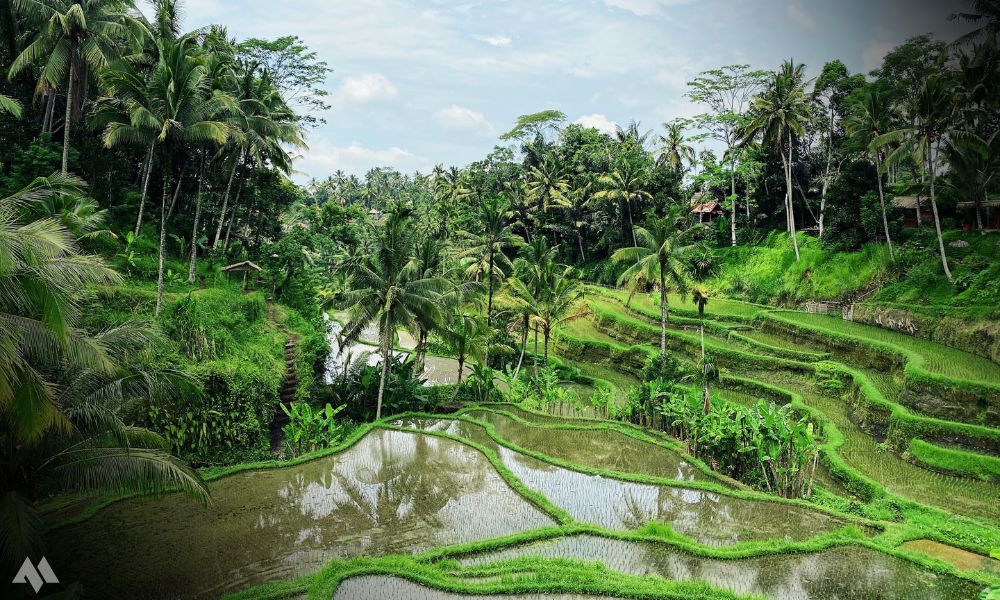
Walking through terraces like this, I remember thinking about how many generations of farmers had shaped this exact landscape by hand, without machinery, over centuries. It’s easy to treat these spots as a photo backdrop and move on, but slowing down and actually talking to the people working the fields (a small tip for a photo is appreciated and goes a long way) adds a layer to the experience that a quick drive-by simply can’t.
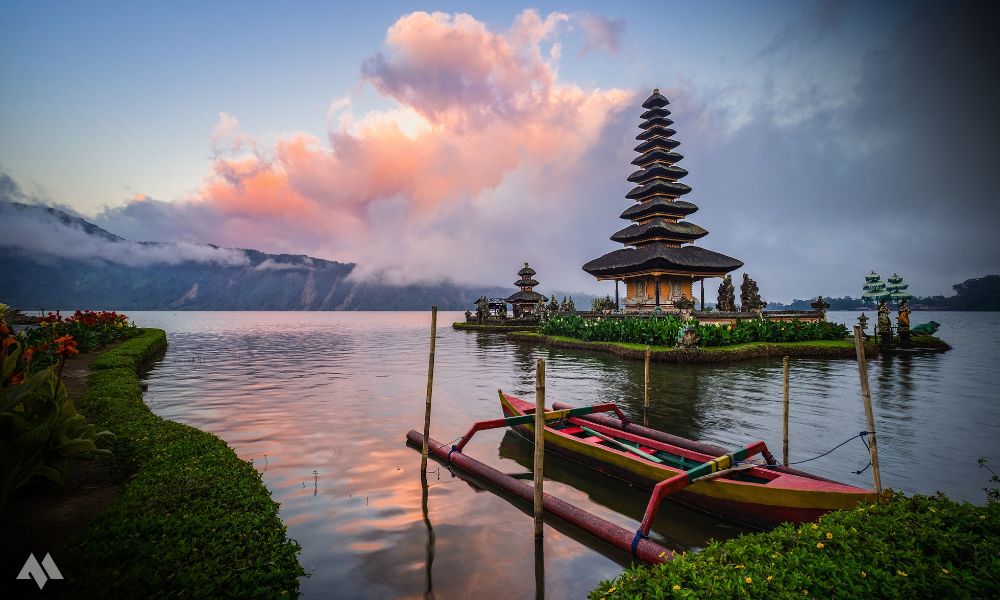
Then there are the temples, and no discussion of Bali temples is complete without Pura Ulun Danu Bratan, the iconic temple that appears to float on Lake Bratan, especially at sunrise when mist rolls off the water and the sky turns shades of pink and orange. Getting there early — before the tour buses arrive around 9am — is the single best travel tip I can give for this spot. Standing at the edge of the lake with a traditional wooden boat resting quietly at the shore, watching the temple’s multi-tiered roofs reflect in the still water, felt less like sightseeing and more like witnessing something sacred.
Beyond Ulun Danu Bratan, don’t skip Tirta Empul (the holy spring water temple where locals and visitors alike take part in a ritual purification bath), Besakih (Bali’s largest and holiest temple complex, perched on the slopes of Mount Agung), and Tanah Lot, a temple built on a rock formation just offshore that looks particularly dramatic at sunset.
Practical Tips I Wish I’d Known Sooner(Bali Travel Guide)
A few final notes that don’t fit neatly into a category but genuinely matter:
- Best time to visit: The dry season, April to October, offers the most reliable weather. July and August are peak tourist months and prices spike, so if you can, aim for shoulder months like May, June, or September.
- Getting around: Scooters are the most efficient way to explore, but Bali traffic is genuinely chaotic and helmet laws exist for a reason. If you’re not comfortable riding, hiring a private driver for the day (often $30–50) is affordable and far less stressful.
- Respect local customs: Bali is predominantly Hindu, and temples require a sarong and sash, usually provided or rentable at the entrance. Dress modestly, and be mindful during ceremonies — it’s normal to see offerings (canang sari) placed on the ground; try not to step on them.
- SIM card: Grab a local SIM at the airport or a convenience store; data is cheap and makes navigating traffic and translating menus far easier.
- Water: Stick to bottled or filtered water, including for brushing your teeth, especially in more rural areas.
Final Thoughts(Bali Travel Guide)
Every time I think I’ve “done” Bali, I find another corner of the island that surprises me — a warung with no sign that serves the best satay I’ve ever had, a waterfall that isn’t on any map, a temple ceremony I stumbled into by accident that ended with an invitation to share food with a local family. That’s the real magic of this island: beyond the rice terraces and infinity pools, Bali rewards travelers who slow down and stay curious.
Whether you’re backpacking through on a shoestring Bali budget travel plan or splurging on a cliffside villa, whether your priority is the Bali beaches, the temples, or simply unplugging for a week, the island has a way of giving you exactly the trip you didn’t know you needed. Plan your Bali itinerary with some flexibility built in, budget a little more than you think you’ll need, and leave room for the unplanned detours — those are usually the ones you end up telling stories about years later.

Lahiru N Gamage is the founder and editor of Modern Lifestyle Center, a lifestyle publication focused on home decor, interior design, beauty, fashion, garden inspiration, and modern living ideas. Through carefully researched articles and practical guides, he helps readers discover creative ways to improve their homes and everyday lifestyles.
Modern Lifestyle Center is committed to providing informative, trustworthy, and inspiring content designed to help readers create beautiful, comfortable, and functional living spaces.