Table of Contents
Introduction: Why Economy Home Decor Is More Popular Than Ever
Economy home decor is the secret to creating a beautiful, welcoming, and stylish home without spending a fortune. Walk into any home and you can usually tell within seconds whether it feels warm and intentional or cold and unfinished. What most people don’t realize is that a stunning interior is not determined by a high price tag. Instead, economy home decor focuses on smart decorating choices, affordable furnishings, and creative styling techniques that make any space feel curated, comfortable, and personal while staying within budget.
With rising costs of living, more homeowners and renters are turning to budget home decor strategies instead of expensive interior designers or big-box furniture showrooms. The good news? You don’t need a five-figure renovation budget to make your home feel like it belongs in a magazine. You need the right knowledge, a bit of patience, and a clear plan — all of which this guide will give you.
By the end of this article, you’ll know exactly how to solve common home decorating problems, where to shop for the best deals, and how to apply affordable home decor ideas room by room.
What Exactly Is Economy Home Decor?
Economy home decor refers to decorating and furnishing a home using cost-effective methods, secondhand or discounted items, do-it-yourself projects, and smart shopping strategies — all while still achieving a polished, intentional look. It’s not about buying the cheapest item available; it’s about buying the smartest item available.
Think of it as the difference between “cheap” and “economical.” Cheap often means low quality and short-lived. Economical means getting the best value, durability, and aesthetic for the money you spend.
The Real Problems People Face When Decorating on a Budget
Before jumping into solutions, let’s address the frustrations most people run into. If you’ve felt any of these, you’re not alone.
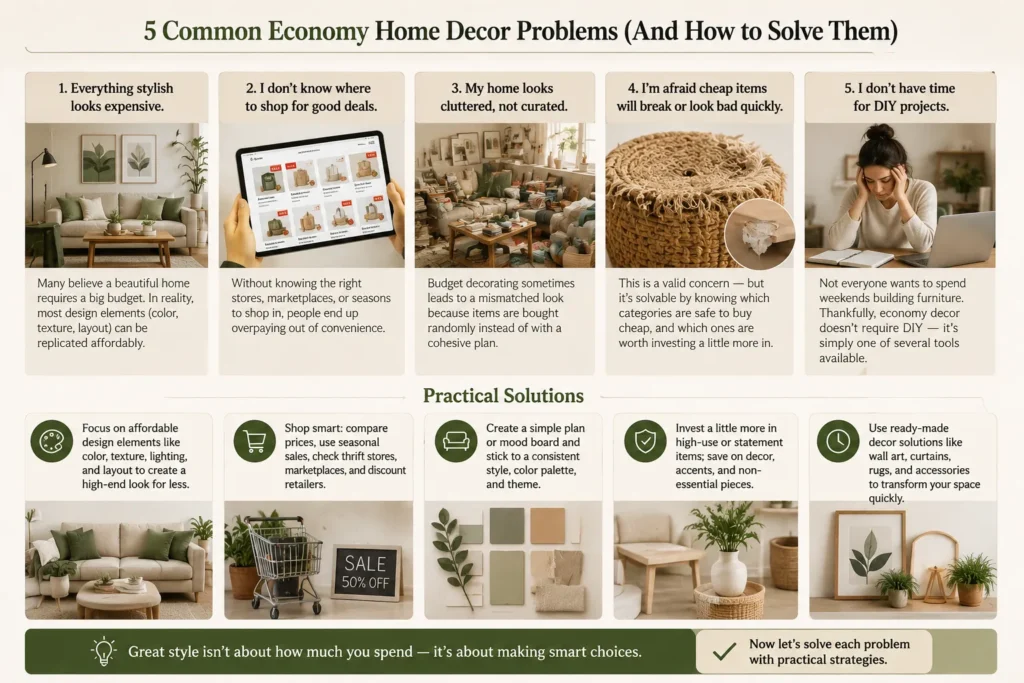
Problem 1: “Everything stylish looks expensive.” Many home decor trends are marketed through luxury retailers, making people believe a beautiful home requires a big budget. In reality, most design elements (color, texture, layout) can be replicated affordably.
Problem 2: “I don’t know where to shop for good deals.” Without knowing the right stores, marketplaces, or seasons to shop in, people end up overpaying out of convenience.
Problem 3: “My home looks cluttered, not curated.” Budget decorating sometimes leads to a mismatched look because items are bought randomly instead of with a cohesive plan.
Problem 4: “I’m afraid cheap items will break or look bad quickly.” This is a valid concern — but it’s solvable by knowing which categories are safe to buy cheap, and which ones are worth investing a little more in.
Problem 5: “I don’t have time for DIY projects.” Not everyone wants to spend weekends building furniture. Thankfully, economy decor doesn’t require DIY — it’s simply one of several tools available.
Now let’s solve each of these problems with practical strategies.
Smart Solutions: How to Build a Stylish Home on a Budget
1. Follow the 80/20 Rule
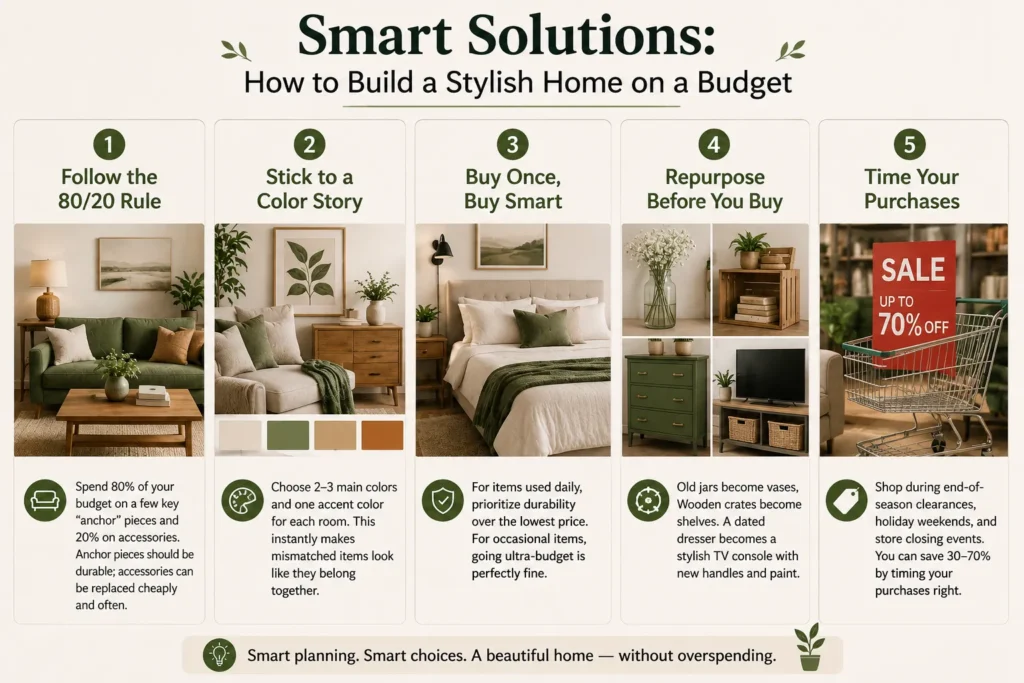
Spend 80% of your budget on a few key “anchor” pieces (a sofa, a bed frame, a dining table) and 20% on accessories (cushions, art, candles, rugs). Anchor pieces should be durable; accessories can be replaced cheaply and often.
2. Stick to a Color Story
Choose 2–3 main colors and one accent color for each room. This single decision instantly makes mismatched, budget-bought items look like they belong together — solving the “cluttered, not curated” problem instantly.
3. Buy Once, Buy Smart — Not Always Cheapest
For items used daily (mattresses, sofas, kitchen chairs), prioritize durability over the lowest price. For items used occasionally or seasonally (decorative trays, vases, wall art), going ultra-budget is perfectly fine.
4. Repurpose Before You Buy
Old jars become vases. Wooden crates become shelves. A dated dresser becomes a stylish TV console with new handles and paint. This is the heart of true economy home decor — reducing the need to buy at all.
5. Time Your Purchases
Furniture and home goods go on major sale during end-of-season clearances, holiday weekends, and store closing events. Planning purchases around these windows can cut costs by 30–70%.
Best Places to Find Affordable Home Decor
This is the section most people search for — where to actually shop. Here are the most reliable categories of sources for cheap home decor and budget-friendly furniture, along with what to expect from each.
1. Thrift Stores and Charity Shops Thrift stores are a goldmine for solid wood furniture, vintage frames, lamps, and ceramics. Items are often priced at a fraction of retail, and many pieces just need a light clean or a coat of paint.
2. Online Marketplaces (Resale Apps) Local buy-and-sell apps and marketplace platforms are excellent for furniture people are giving away or selling cheaply due to moving or upgrading. Search regularly, as good listings move fast.
3. Discount and Closeout Retailers Stores that specialize in overstock, returned, or last-season inventory often carry the same brands as premium retailers at 40–70% lower prices.
4. Garage Sales and Estate Sales These are some of the best sources for unique, character-rich pieces — antique mirrors, solid furniture, and decorative items — usually priced to sell quickly.
5. Dollar and Discount Variety Stores Perfect for small decor accents: candle holders, picture frames, baskets, artificial plants, and seasonal decorations.
6. Local Artisan and Flea Markets A great source for handmade, one-of-a-kind decor pieces that add personality, often at lower prices than mass-produced “boutique style” items.
7. Manufacturer Outlet and Clearance Sections Many furniture and home goods brands have outlet stores or clearance corners (in-store or online) where slightly imperfect or discontinued items are heavily discounted.
8. Community Giveaway Groups Neighborhood groups and community boards often have people giving away furniture and decor for free — simply because they’re decluttering or moving.
Room-by-Room Economy Home Decor Ideas
Living Room
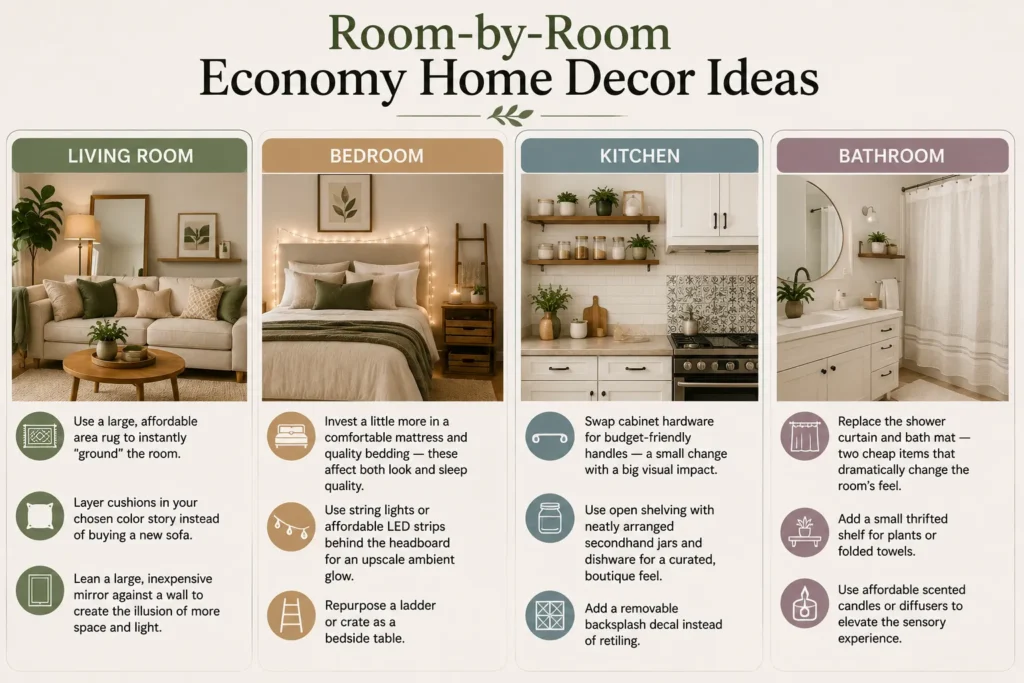
- Use a large, affordable area rug to instantly “ground” the room.
- Layer cushions in your chosen color story instead of buying a new sofa.
- Lean a large, inexpensive mirror against a wall to create the illusion of more space and light.
Bedroom
- Invest a little more in a comfortable mattress and quality bedding — these affect both look and sleep quality.
- Use string lights or affordable LED strips behind the headboard for an upscale ambient glow.
- Repurpose a ladder or crate as a bedside table.
Kitchen
- Swap cabinet hardware for budget-friendly handles — a small change with a big visual impact.
- Use open shelving with neatly arranged secondhand jars and dishware for a curated, boutique feel.
- Add a removable backsplash decal instead of retiling.
Bathroom
- Replace the shower curtain and bath mat — two cheap items that dramatically change the room’s feel.
- Add a small thrifted shelf for plants or folded towels.
- Use affordable scented candles or diffusers to elevate the sensory experience.
DIY Economy Decor Hacks Worth Trying
Even if you’re not a “DIY person,” these projects take under an hour and require minimal skill:
- Paint old wooden furniture in a neutral or trending color for an instant refresh.
- Frame fabric scraps or wrapping paper as affordable wall art.
- Turn glass bottles into vases with twine or paint detailing.
- Create a gallery wall using mismatched thrifted frames painted the same color for cohesion.
Common Mistakes to Avoid in Economy Home Decor
- Buying too many small items at once, which leads to clutter instead of style.
- Ignoring scale and proportion — a too-small rug or too-large frame can make a budget room look unintentional.
- Skipping lighting upgrades — lighting affects mood and perceived value more than almost any other element, and budget-friendly lamps can transform a room.
- Not measuring spaces before buying secondhand furniture, leading to items that don’t fit.
The Sustainability Bonus of Economy Home Decor
One underrated benefit of budget decorating is its positive environmental impact. Buying secondhand, repurposing old items, and avoiding fast-furniture trends all reduce landfill waste and the demand for new manufacturing. In other words, economy home decor isn’t just good for your wallet — it’s good for the planet too.
Final Thoughts
A beautiful home isn’t about how much you spend — it’s about how thoughtfully you spend it. With a clear color story, a mix of secondhand and new pieces, and knowledge of where to shop, anyone can master economy home decor and create a space that feels personal, warm, and stylish.
Frequently Asked Questions (FAQ)
1. What does “economy home decor” actually mean? It refers to decorating a home affordably using budget-friendly furniture, secondhand finds, DIY projects, and smart shopping strategies, without sacrificing style.
2. Is economy home decor the same as “cheap” decor? Not exactly. Cheap implies low quality, while economy decor focuses on getting the best value and durability for the lowest reasonable price.
3. Where is the best place to start when decorating on a budget? Start with a color story and a list of “anchor” pieces you need most (sofa, bed, table), then fill in the rest with affordable accessories.
4. Are thrift stores really a good source for home decor? Yes. Thrift stores frequently carry solid wood furniture, vintage decor, and unique pieces at a fraction of retail prices, especially if you check regularly.
5. How can I make budget furniture look more expensive? Focus on cohesive colors, good lighting, and a few high-quality textiles like cushions or throws — these details create a polished look regardless of furniture cost.
6. Is DIY necessary for economy home decor? No. DIY is optional. Many people achieve a stylish, budget-friendly home purely through smart shopping and secondhand finds.
7. What items are okay to buy ultra-cheap, and what should I invest more in? Invest more in daily-use items like mattresses and seating. Items used occasionally, like decorative accents or seasonal items, can be bought as cheaply as possible.
8. When is the best time to buy furniture and decor on sale? End-of-season clearances, major holiday weekends, and store closing or relocation sales typically offer the deepest discounts.
9. How do I avoid a cluttered look when shopping on a budget? Stick to a defined color palette and limit accessory purchases to items that serve a clear visual or functional purpose in the room.
10. Can economy home decor be environmentally friendly? Yes. Buying secondhand and repurposing existing furniture reduces waste and demand for new manufacturing, making budget decorating a naturally more sustainable choice.

Lahiru N Gamage is the founder and editor of Modern Lifestyle Center, a lifestyle publication focused on home decor, interior design, beauty, fashion, garden inspiration, and modern living ideas. Through carefully researched articles and practical guides, he helps readers discover creative ways to improve their homes and everyday lifestyles.
Modern Lifestyle Center is committed to providing informative, trustworthy, and inspiring content designed to help readers create beautiful, comfortable, and functional living spaces.